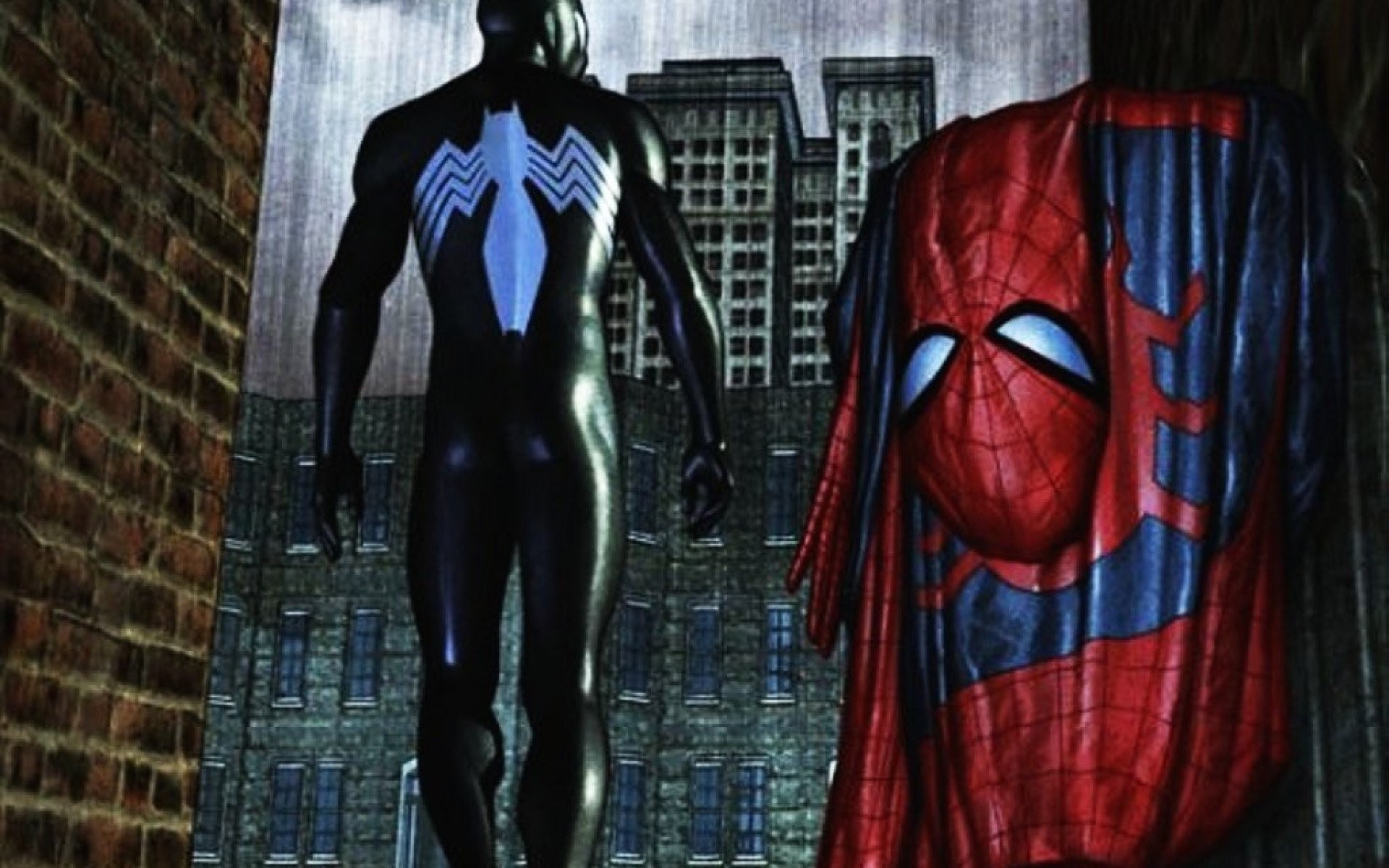
It is just a garbage can. A rainy, gray, New York City alleyway. But there it is—red and blue spandex peeking out from under a pile of literal trash. If you grew up reading Marvel comics or watching the early 2000s blockbusters, you know exactly what I’m talking about. The spiderman suit in trash isn't just a bit of clever cinematography; it is a cultural monument. It represents the moment Peter Parker finally broke.
Honestly, being a superhero sucks. Peter is broke, his grades are slipping, his boss is a jerk, and the love of his life is marrying an astronaut. Who wouldn’t throw the suit away? This image first appeared in The Amazing Spider-Man #50 back in 1967, titled "Spider-Man No More!" and it changed everything about how we view heroes. Before this, heroes were paragons. After this, they were humans with laundry problems.
The Panel That Changed Marvel Forever
John Romita Sr. was the artist behind that original 1967 comic panel. It’s a haunting image. Peter is walking away in the foreground, shoulders slumped, back to the viewer. The suit is discarded in a wire mesh trash bin. Romita Sr. once mentioned in interviews that he wanted to capture the sheer weight of Peter's exhaustion. It wasn't about a villain winning. It was about life winning.
Sam Raimi, a massive fan of the Silver Age comics, recreated this shot almost frame-for-frame in Spider-Man 2 (2004). You've probably seen the meme. You've seen the posters. But the context matters. In the film, Peter’s powers are failing because of a psychosomatic block. He’s depressed. When he dumps that suit, the music swells with this tragic, operatic weight. It is one of the few times a comic book movie perfectly translated the feeling of a specific page to the big screen.
Why the Spiderman Suit in Trash Meme Won't Die
Internet culture loves a good "I'm done" vibe. The spiderman suit in trash has become the universal shorthand for quitting something that is objectively cool but personally exhausting. People use it to talk about leaving toxic jobs, quitting gaming marathons, or just giving up on a diet.
But why does it work?
Contrast. That’s the secret. You have this bright, heroic, symbol of hope—the suit—surrounded by filth and waste. It’s a visual paradox. It suggests that even the most "super" among us can reach a point where the cost of being special is just too high.
The Realism of Discarded Dreams
Think about the physical suit for a second. In the 2004 movie, that was a high-end prop. There were rumors for years about the "hero" suits used on set being stolen or misplaced. Can you imagine finding a screen-accurate spiderman suit in trash in real life? Collectors would pay hundreds of thousands of dollars for it today. Yet, in the story, it’s worth nothing to Peter compared to the chance at a "normal" life.
- The 1967 comic version was found by a child and taken to J. Jonah Jameson.
- The 2004 movie version ended up as a trophy on Jameson's wall (until he needed Spider-Man back).
- The Spider-Verse movies even referenced it, because you can't have a Spider-Man story without acknowledging the "quitting" phase.
The Psychological Weight of "No More"
Psychologically, the spiderman suit in trash represents the "Dark Night of the Soul" in storytelling. Stan Lee and Steve Ditko—and later Romita Sr.—built Peter Parker on the idea of "The Hero Who Could Be You."
Superman is an alien. Batman is a billionaire. Peter is a kid from Queens who can't pay his rent. When he throws the suit away, it's the ultimate relatable act. We’ve all wanted to throw our responsibilities in a dumpster and walk away into the rain.
What’s interesting is how the suit is found. In the comics, a kid finds it and brings it to the Daily Bugle. This creates a ripple effect. The city starts to realize they miss him. Crime goes up. The absence of the hero is more felt than his presence. This is a classic narrative trick, but it hits harder here because we saw the literal disposal of his identity.
Variations Across the Multiverse
We’ve seen different takes on this. In Spider-Man: Homecoming, Peter doesn't throw the suit away; Tony Stark takes it back. It’s a different dynamic—paternal discipline versus self-abandonment. But the "No More" trope is so strong that even the MCU had to pay homage to it.
The original Romita Sr. art is currently valued at astronomical prices. Original comic art from that era, especially iconic splash pages or key panels, is the "fine art" of the modern world. If that specific panel ever hit a major auction house like Heritage Auctions, we’re talking mid-six to low-seven figures. Not bad for a drawing of a trash can.
How to Capture the Aesthetic
If you're a cosplayer or a photographer trying to recreate the spiderman suit in trash look, there are a few things you need to get right. It’s not just about dumping a costume in a bin.
First, lighting. It has to be moody. Rim lighting on the suit helps the red pop against the grime. Second, the "slump." Peter walking away needs to look heavy. It’s all in the shoulders. If you look at the 2004 film, Tobey Maguire doesn't just walk; he trudges.
- Texture: Use a suit with some raised webbing so it catches the light.
- Environment: Brick walls and wet asphalt are non-negotiable.
- The Bin: Wire mesh bins are the classic 60s/70s NYC vibe. Plastic bins look too modern and lose the "classic" feel.
The Legacy of Discarded Heroism
Basically, we keep coming back to this image because it’s honest. Most superhero stories are about the "power." This one is about the "responsibility" and the fact that responsibility is a heavy, annoying, often thankless burden.
When you see the spiderman suit in trash, you aren't seeing a defeat. You're seeing a choice. Peter chooses himself for a moment. And the fact that he eventually goes back to the trash, or makes a new suit, is what makes him a hero. It’s not the powers. It’s the fact that he keeps picking the suit back up even after he knows how much it hurts to wear it.
Actionable Steps for Fans and Collectors
If you're looking to dive deeper into this specific piece of Marvel history, or if you want to celebrate the "Spider-Man No More" legacy, here is what you should actually do:
- Read the Source: Track down a copy of The Amazing Spider-Man #50. You don't need an original (which costs a fortune); the Marvel Masterworks or Omnibus editions carry the high-res scans of Romita’s work.
- Study the Cinematography: Watch the "Raindrops Keep Fallin' on My Head" sequence in Spider-Man 2. It’s a masterclass in visual storytelling, showing the joy of being "normal" before the guilt sets in.
- Check Local Galleries: Keep an eye on places like the Society of Illustrators in New York. They often host exhibits featuring Romita Sr. or Ditko's work. Seeing the scale of the original ink work is a different experience entirely.
- Photography Project: If you’re a creator, try a "Discarded Identity" shoot. Use the spiderman suit in trash as a template to explore themes of burnout and identity. It’s a great exercise in lighting and composition.
The image remains a powerhouse because it’s the ultimate "what if." What if we just stopped? What if we walked away? Peter Parker did it. And the world stayed gray until he decided to put the mask back on. That is the real power of the image. It’s not about the trash; it’s about the man walking away from it.