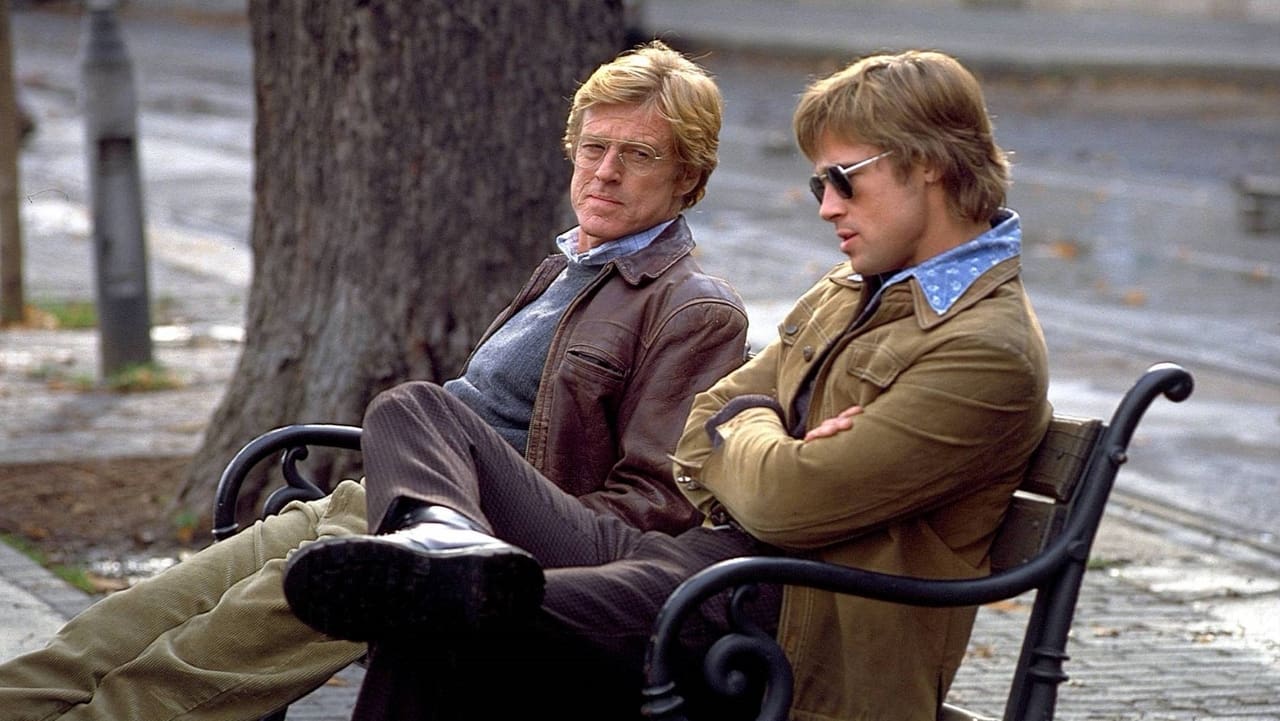
Tony Scott’s Spy Game hit theaters in late 2001, right at a massive turning point for global politics. If you watch it now, it feels like a relic of a different era of filmmaking, honestly. It’s gritty. It’s fast. But mostly, it’s a masterclass in chemistry. When people look up the Spy Game cast, they usually start with the two heavy hitters at the top of the call sheet: Robert Redford and Brad Pitt. It was marketed as a "passing of the torch" moment, and in many ways, it was. You had the golden boy of the 70s acting alongside his clear successor.
But there’s way more to the ensemble than just those two faces.
The movie isn't just a globetrotting thriller; it’s a procedural. Most of the action actually happens inside a sterile briefing room at CIA headquarters in Langley. This is where the supporting cast does the heavy lifting. While Pitt is rotting in a Chinese prison and Redford is playing a high-stakes game of "screw you" with his own bosses, the room is filled with character actors who make the bureaucracy feel dangerous.
The Power Dynamic: Redford vs. the Suits
Robert Redford plays Nathan Muir. He’s an old-school dinosaur about to retire. He’s cynical, smart, and totally willing to burn his bridges. On his last day, he finds out his former protégé, Tom Bishop (Brad Pitt), has been captured in China during an unsanctioned rescue mission. The CIA wants to let Bishop die to protect a trade deal. Muir has about 24 hours to trick his own agency into saving him.
This is where the Spy Game cast shines through the inclusion of Stephen Dillane. You might know him as Stannis Baratheon from Game of Thrones, but here, he plays Charles Harker. He’s the antagonist, though not a villain in the traditional sense. He’s just a mid-level CIA executive who views people as assets and liabilities. The scenes between Redford and Dillane are some of the best "acting as combat" moments in early 2000s cinema. Dillane is cold. He’s precise. Redford, meanwhile, plays it loose and charming, hiding the fact that he’s stealing files and making unauthorized phone calls right under Harker’s nose.
The Protégé: Why Brad Pitt Worked
Tom Bishop could have been a boring character. He’s the moral center of the movie, which is usually the least interesting part of a spy flick. However, Brad Pitt brings a certain desperation to the role. Through a series of flashbacks—Vietnam, Berlin, Beirut—we see how Muir "created" Bishop.
Pitt was 37 when this came out. He was at the height of his "movie star" powers, but he lets himself look haggard and broken for a large portion of the runtime. The dynamic works because Pitt and Redford actually look like they could be related. Their mannerisms are similar. Their smiles are identical. It makes the mentor-student relationship feel lived-in rather than scripted.
The Supporting Players You Forgot Were There
Catherine McCormack plays Elizabeth Hadley, the woman who comes between the two men. It’s a thankless role on paper—the "love interest" who causes the rift—but McCormack gives her a hard edge. She’s not a damsel. She’s an operative with her own agenda and her own trauma. Her presence is the catalyst for why Bishop goes rogue in the first place.
Then you have the Langley crew:
- Larry Bryggman as Troy Folger.
- Marianne Jean-Baptiste as Gladys Jennings.
- Ken Leung as Li.
- David Hemmings as Harry Duncan.
Marianne Jean-Baptiste is especially good as Muir’s secretary. She has very little dialogue, but her rapport with Redford tells you everything you need to know about Muir's history at the CIA. She knows he’s up to something. She helps him anyway. It’s that subtle world-building that makes the Spy Game cast feel like a real unit rather than a group of actors in a room.
Why the Casting Matters for the Story's Stakes
If the CIA executives didn't feel competent, Muir's victory wouldn't matter. The movie spends a lot of time showing us how smart these people are. They have satellites, they have ground teams, they have infinite money.
The genius of the casting is that even the minor roles feel significant. Take David Hemmings, who plays Muir’s contact in Berlin and later Hong Kong. Hemmings was a legend of the 60s (the star of Blow-Up), and seeing him as an aging, whiskey-soaked fixer adds a layer of "old spy" credibility to the film. It suggests a whole world of espionage that existed long before the movie started.
A Masterclass in Directing Actors
Tony Scott was known for his frantic editing and high-contrast visuals, but he was also incredible at getting performances out of veterans. He let Redford be Redford. There’s a scene on a rooftop in Berlin where Muir is explaining the "rules" of spying to Bishop. It’s mostly close-ups. The wind is blowing. The camera is swirling. But the focus is entirely on the eyes.
Scott used the Spy Game cast to balance his visual style. Because the performances are so grounded, the crazy camera angles and fast cuts don't feel distracting. They feel like the internal energy of the characters.
Misconceptions About the Movie’s Success
Some people think Spy Game was a bit of a flop. It wasn't. It made about $143 million globally, which was decent for 2001. But it got overshadowed. It came out just two months after 9/11. The world’s appetite for cynical, "the government is the bad guy" spy movies changed overnight. Audiences wanted 24 and Jack Bauer. They wanted clear-cut heroes.
Spy Game is messy. Nathan Muir isn't a "good" guy. He’s a guy who does a good thing at the end of a very long, morally gray career. The cast sells that ambiguity. You don't necessarily like these people, but you're fascinated by them.
Technical Prowess and Authenticity
The film used real locations—or at least very convincing doubles. Budapest stood in for East Berlin. Morocco stood in for Vietnam and Beirut. This physical reality helped the actors. When you see Brad Pitt running through the rubble of a bombed-out building in Lebanon, it doesn't look like a backlot in Burbank.
The technical consultants on the film ensured that the "tradecraft" was mostly accurate. The way the Spy Game cast handles equipment, the way they talk on the phone, and the way they conduct surveillance feels authentic to the time. They use dead drops, signal mirrors, and "pocket litter" to establish identities. It’s a analog movie in a world that was just starting to go digital.
Actionable Takeaways for Movie Buffs
If you're revisiting the movie or watching it for the first time, keep an eye on these specific details:
- Watch the hands. Redford is constantly fiddling with things—pills, folders, phones. It’s a nervous energy that contrasts with his calm voice.
- The Soundtrack. Harry Gregson-Williams' score is an all-timer. It perfectly mirrors the tension between the electronic "new" world and the orchestral "old" world.
- The Ending. Pay attention to how the "Operation Dinner Out" payoff is handled. It’s one of the most satisfying endings in the genre because it’s not about an explosion; it’s about a phone call.
To truly appreciate the Spy Game cast, you should watch it as a double feature with All the President's Men. Seeing Redford as the young, hungry journalist Bob Woodward and then seeing him as the cynical, retiring Nathan Muir provides a fascinating meta-commentary on his career. It’s almost like seeing what Woodward might have become if he’d joined the CIA instead of the Washington Post.
Go back and look at the "rules" Muir teaches Bishop. They are the backbone of the script. "Put a stake in the ground." "Don't ever risk your life for an asset." By the end of the film, Muir breaks every single one of his own rules to save the one person he actually cares about. That’s the heart of the movie, and it’s why the performances still resonate.
Next time you're scrolling through a streaming service and see that thumbnail of Redford and Pitt in their tactical gear, give it a click. It’s a reminder that before everything was a superhero franchise, we had adult thrillers driven by character, dialogue, and top-tier casting.