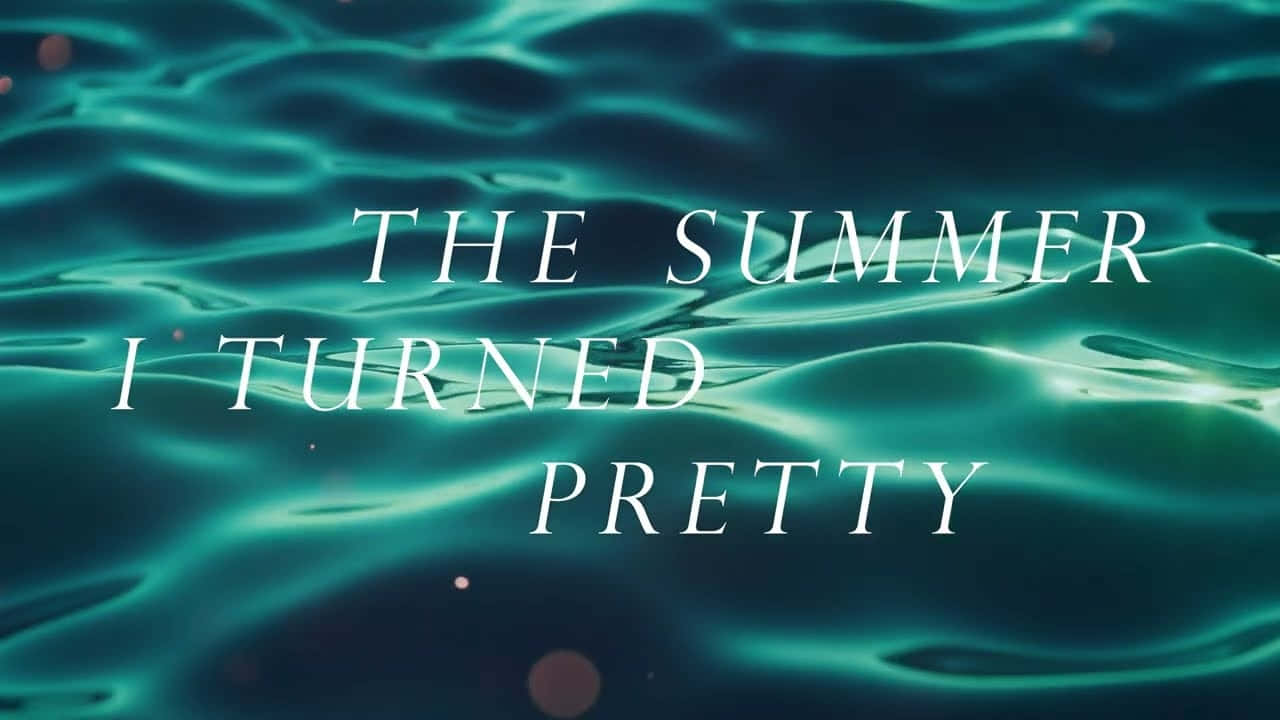
It happens in a split second. You’re sitting there, the soft acoustic guitar starts humming, and then that distinctive, airy font sweeps across the screen. Most people just call it the The Summer I Turned Pretty title card, but for fans of the Prime Video series, it’s basically a ritual. It’s the visual equivalent of a deep breath before diving into a pool.
Honestly, it’s rare for a simple graphic to carry this much weight. In the age of "Skip Intro," Jenny Han’s adaptation of her beloved book trilogy managed to turn a few seconds of typography into a full-blown aesthetic movement. It isn’t just a title. It’s a mood. It’s "Cousins Beach" in a bottle.
If you’ve spent any time on TikTok or Pinterest lately, you’ve seen the recreations. People aren't just watching the show; they're trying to live inside that specific blue-and-white color palette. It’s fascinating how a piece of marketing collateral became the blueprint for "Coastal Grandmother" meets "Gen Z Angst."
The Anatomy of that Iconic Font
Let’s get into the weeds for a second. What actually makes the The Summer I Turned Pretty title card work? It isn't just a random choice from a dropdown menu in Premiere Pro. The show uses a customized serif font that feels both timeless and deeply nostalgic. It’s elegant but not stuffy.
Typography experts often point to the "swash" elements—those little decorative flourishes on the letters. They mimic the flow of water. Or maybe the curve of a summer romance that’s about to get complicated. It’s legible, which is the first rule of design, but it has personality. It feels like something a teenager might doodle in a diary if that teenager had world-class calligraphy skills.
The color is the other half of the equation. Usually, it’s a crisp white or a soft, watery blue. It pops against the sun-drenched b-roll of the beach or the interior of the Fisher’s house. It’s clean. It’s aspirational. It tells you exactly what kind of emotional ride you’re in for before Belly even says a word of voiceover.
Why We Obsess Over the Summer I Turned Pretty Title Card
Design matters because it sets expectations. When you see the title card for Stranger Things, you expect synth-heavy 80s horror. When you see the The Summer I Turned Pretty title card, you expect the specific ache of being sixteen and caught between two brothers.
The branding is so strong that fans have started using "The Summer I Turned Pretty" filters to announce their own vacations. I’ve seen countless "Day in my Life" vlogs that open with a mimicry of that exact title card style. It’s a shorthand for a specific kind of summer: one where the lighting is always golden hour and the drama is high-stakes but beautiful.
There’s a psychological component here, too. The show arrived at a time when we were all craving a very specific brand of escapism. The title card acts as a portal. The moment it appears, you aren't in your living room anymore; you're on a porch swing in Virginia.
Recreating the Look
You don't need a Hollywood budget to get this vibe. Most creators are using apps like Canva or Phonto to find similar serif fonts—think Caslon or Pistilli—and then playing with the tracking (the space between the letters) to give it that airy, expensive feel.
- Use a high-quality photo with a lot of "negative space" (empty sky or sand).
- Lower the contrast slightly to give it a film-like quality.
- Choose a serif font with thin lines.
- Keep the text centered but slightly higher than the middle of the frame.
It sounds simple. It is simple. But that’s the genius of it. It’s accessible.
The Evolution Across Seasons
If you look closely, the The Summer I Turned Pretty title card doesn't stay static. Season 1 felt like a fresh start—bright, hopeful, almost shimmering. By Season 2, which dealt with much heavier themes like grief and the potential loss of the beach house, the timing and the backdrop of the title card shifted.
The music cues changed. The "vibe" stayed, but it felt more grounded. It’s a masterclass in how to keep a brand consistent while acknowledging that the story is moving forward. You can't have the same bubbly intro when the characters are mourning Susannah. The title card had to grow up a little bit, just like Belly did.
What This Means for TV Branding
We’re seeing a shift. Showrunners are realizing that the title sequence isn't just a place to put credits; it’s a viral marketing tool. Euphoria did it with its blurry, purple-hued text. White Lotus did it with its intricate, symbolic wallpaper.
The The Summer I Turned Pretty title card succeeded because it understood its audience perfectly. It knew that the fans would want to screenshot it, share it, and emulate it. It turned a television show into a lifestyle brand.
It’s also about the "BookTok" influence. Since the show is based on novels, the title card feels like it could be a modern book cover. It bridges the gap between the tactile feeling of holding a paperback and the digital experience of streaming a series.
Beyond the Screen
It’s leaked into real life. Go to any Target or beach-town gift shop. You’ll see hoodies and tote bags using that exact font and layout. It’s become a symbol of a "Cousins Beach" lifestyle that doesn't actually exist but that we all kind of want to visit.
Even the way the title appears—sometimes fading in, sometimes sliding—is intentional. It’s meant to feel like a memory. That’s the core of the show’s appeal. It’s not just about what’s happening; it’s about how it feels to remember your first real summer.
Actionable Steps for Your Own Content
If you're a creator looking to capture this specific lightning in a bottle, start with the "less is more" philosophy. The The Summer I Turned Pretty title card works because it isn't cluttered.
- Focus on the font. Look for "Modern Serifs" that have a mix of thick and thin lines.
- Master the color grade. Use warm highlights and cool shadows to mimic the show's look.
- Timing is everything. If you're making a video, let the footage breathe for two seconds before the text appears.
- Audio pairing. Don't just slap a song on there. Find a track that starts with a solo instrument—guitar or piano works best—to mirror the show's intimate opening.
The obsession with this title card isn't just about a font choice. It’s about the feeling of a season that ends too fast. It’s about the nostalgia we feel for things that haven't even happened yet. Whether you're Team Conrad or Team Jeremiah, you have to admit: they nailed the branding.