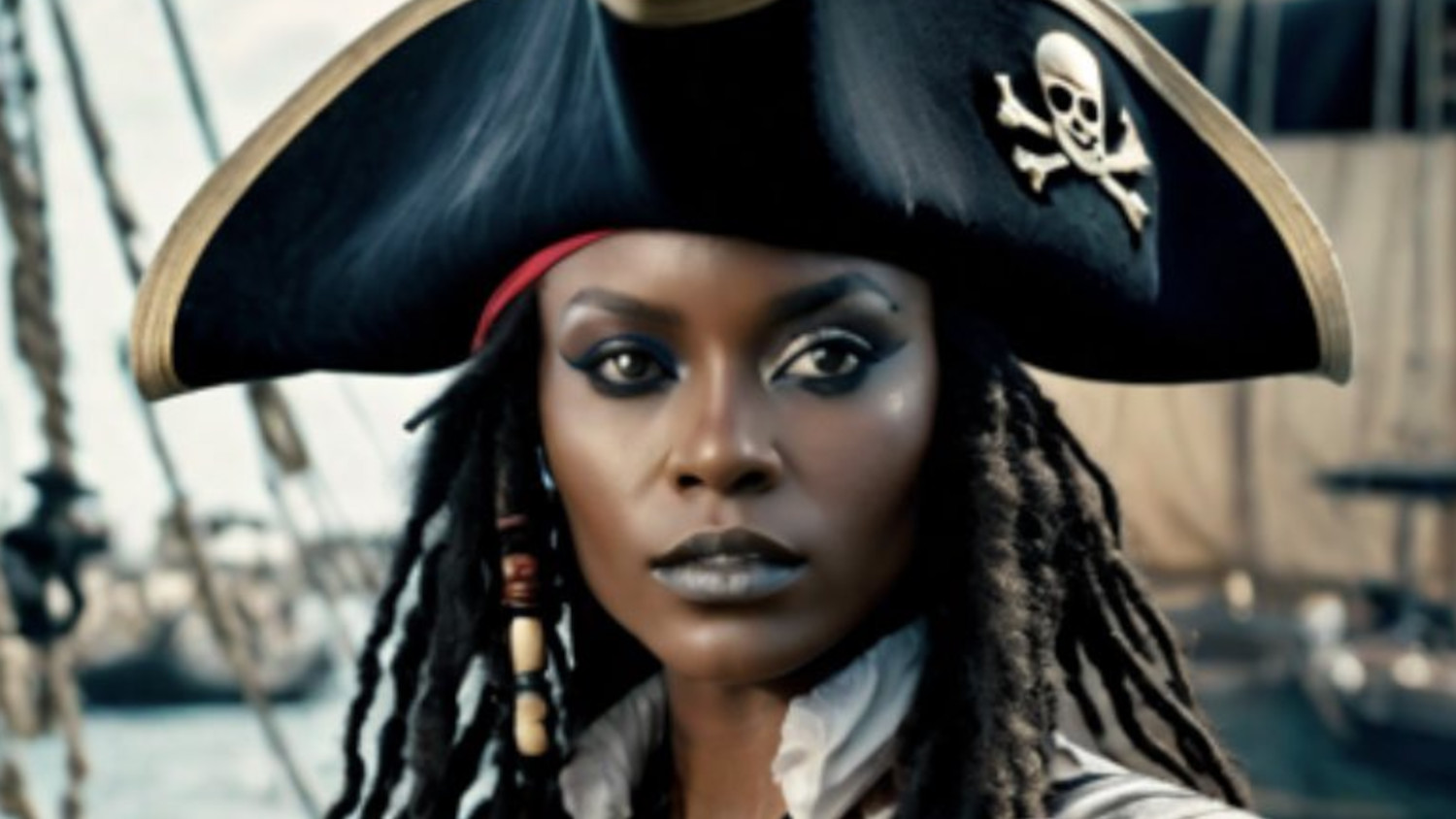
Elizabeth Swann wasn't supposed to be the lead. Not really. Back in 2003, when The Curse of the Black Pearl dropped, everyone was obsessed with Johnny Depp’s Keith Richards-inspired swagger or Orlando Bloom’s earnest blacksmith routine. But if you actually sit down and watch the progression of the original trilogy, the women from Pirates of the Caribbean are the ones actually driving the plot forward while the men mostly trip over their own egos.
Elizabeth starts as the "governor's daughter" trope. Boring, right? Except she isn't. She’s the one who steals the Aztec gold in the first place. She’s the one who realizes that being a "proper lady" is basically a death sentence in a world of undead pirates and skeletal monkeys. By the time At World's End rolls around, she isn't just a survivor; she's the elected Pirate King. That’s a wild arc for a character who started the series literally fainting because her corset was too tight.
The Evolution of Elizabeth Swann: From Corsets to Pirate King
Let’s be real about Elizabeth. Keira Knightley played her with this sort of simmering frustration that made the character feel human. You see it early on. She’s bored. She’s trapped by her social status. When she gets kidnapped by Barbossa’s crew, she doesn't just sit in a cell and cry. She negotiates. She uses the Code of the Brethren—a legal loophole, basically—to buy herself time.
Most people forget that Elizabeth is arguably the most morally grey character in the original films. Remember when she chained Jack Sparrow to the mast of the Black Pearl so the Kraken would take him instead of the rest of the crew? That’s cold. It’s also brilliant. It’s the kind of ruthless pragmatism that defines the best women from Pirates of the Caribbean. She wasn't playing the hero; she was playing to win.
Her transition into a leader wasn't just some "girl power" moment written to check a box. It was earned through trauma and tactical brilliance. When she stands on the deck of the Endeavour and gives that "Hoist the colors" speech, it works because we've watched her lose her father, her home, and her innocence. She became the very thing her father was supposed to protect her from, and she did it better than any of the men around her.
Tia Dalma and the Power of the Divine Calypso
Then you’ve got Tia Dalma. If Elizabeth represents the political and martial power of women in this world, Tia Dalma—played with incredible weirdness by Naomie Harris—represents the primal, supernatural force of the ocean itself.
Honestly, the reveal in At World's End that Tia Dalma is actually Calypso, the sea goddess, is one of the few times a high-fantasy twist felt genuinely earned in a blockbuster. She isn't just a swamp witch. She’s the reason Davy Jones is a squid-man. Her heartbreak is literally the reason the sea is dangerous.
Why the Calypso Subplot Matters
It adds a layer of cosmic tragedy to the high-seas swashbuckling. The relationship between Calypso and Davy Jones is the emotional anchor of the second and third films. It shows that the "rules" of the pirate world—the Ferries of the dead, the Locker, the storms—aren't just random magic. They are the result of a woman’s fury and a man’s betrayal.
When she finally breaks free from her human skin and turns into a thousand crabs before becoming a giant, it’s chaotic. It’s messy. It doesn't solve the battle for the heroes. In fact, she creates a maelstrom that almost kills everyone. That’s the point. The women from Pirates of the Caribbean like Calypso aren't there to be "helpful." They have their own agendas, their own vengeance, and their own autonomy.
Angelica and the Legacy of the Spanish Main
Moving into On Stranger Tides, we get Penelope Cruz as Angelica. She’s a fascinating addition because she’s the first woman who can actually go toe-to-toe with Jack Sparrow on a level of pure manipulation.
She’s Blackbeard’s daughter (or so she says), and her dynamic with Jack is built on a foundation of lies and religious guilt. It’s a weird combo. But it works. Angelica represents a different kind of female pirate—one who is motivated by family and redemption rather than just gold or freedom. She’s desperate to save her father’s soul, even though he’s a literal monster who uses zombies to run his ship.
- She’s an expert fencer.
- She’s a master of disguise (she literally spends the first act pretending to be Jack).
- She’s the only person who actually managed to "con" Jack Sparrow for an extended period.
Critics were hit or miss on the fourth movie, but you can't deny that Angelica brought a necessary tension. She wasn't a love interest in the traditional sense. She was an adversary who happened to have a history with the protagonist. That’s a much more interesting role for women from Pirates of the Caribbean than just being the damsel.
Carina Smyth: The Scientist in a World of Myths
By the time we get to Dead Men Tell No Tales, the franchise tries to ground itself again with Carina Smyth, played by Kaya Scodelario. She’s a "woman of science" in an era where that usually got you accused of being a witch. Which, of course, she is. Multiple times.
Carina is the daughter of Hector Barbossa, though she doesn't know it for most of the film. Her journey is about the "Diary of Galileo" and the Map that No Man Can Read. While the guys are running around fighting ghost sailors, Carina is doing actual astronomy.
It’s an interesting contrast. You have the women from Pirates of the Caribbean who use swords and cannons, and then you have Carina, who uses her brain to navigate the stars. Her presence highlights the historical reality that for women in the 18th century, being smart was often seen as a threat to the natural order. Her rejection of "magic" in a world where she is literally being chased by ghosts is kind of hilarious, but it also makes her the most relatable character in that final installment.
The Real History Behind the Fiction
Hollywood takes liberties. Obviously. But the women from Pirates of the Caribbean do draw some thin, blurry lines from real history. You’ve probably heard of Anne Bonny and Mary Read. They were real pirates in the 1700s who dressed as men to serve on Calico Jack Rackham’s ship.
When they were eventually captured, they both escaped execution by "pleading their bellies"—they were pregnant, and British law didn't allow for the execution of an unborn child. They were fierce. Reports from their trial suggest they were "very active on board, and willing to do any Thing."
While Elizabeth Swann isn't a direct adaptation of Anne Bonny, the DNA is there. The idea of a woman from a "respectable" background throwing it all away to live a life of crime on the high seas isn't just a Disney invention. It happened. It was rare, sure, but it happened.
Why the Franchise Struggles Without Strong Female Leads
If you look at the spin-off rumors and the future of the series, there’s a reason names like Margot Robbie keep coming up. The "Jack Sparrow" formula has a shelf life. The character is a catalyst, not a protagonist. He’s the chaos that happens to other people.
The heart of the story—the actual emotional stakes—has always resided with the women from Pirates of the Caribbean. Elizabeth’s longing for freedom, Calypso’s heartbreak, Angelica’s search for redemption. Without those grounding elements, the movies just become a series of CGI boat fights.
Essential Lessons from the Pirates Heroines
If we look at how these characters were written, there are some pretty clear takeaways for what makes a female lead work in an action franchise.
Agency over Likability. Elizabeth Swann does things that make her unlikable. She lies. She kills. She betrays Jack. But she does them for a reason. Characters who are allowed to be "bad" are always more interesting than "strong female characters" who are just perfect at everything.
Motivation Beyond Romance. While the Elizabeth/Will Turner romance is the spine of the first three movies, it isn't Elizabeth’s only personality trait. She wants adventure. She wants to see the world. She wants to lead. By the end, she chooses her duty as King over sitting on a beach waiting for Will to come back once every ten years.
Specialization. Each woman in the series brings a specific "skill." Tia Dalma has the supernatural. Angelica has the con. Carina has the science. Elizabeth has the leadership. They aren't interchangeable.
Actionable Takeaways for Fans and Writers
If you're looking to dive deeper into the lore of women from Pirates of the Caribbean, start by re-watching the original trilogy with a focus on Elizabeth’s decision-making. Notice how often she is the one to suggest the plan that actually works.
For writers or creators, the lesson here is simple: stop writing women as the "support" for the male lead's journey. Elizabeth Swann succeeded as a character because she had her own journey that frequently collided with—and often overrode—the goals of Jack Sparrow and Will Turner.
Next time you watch At World’s End, pay attention to the council of the Pirate Lords. Elizabeth is the only one who actually understands the political stakes. She’s the only one who realizes that if they don't fight, they die. That’s not just "being a lead"; that’s being the smartest person in the room.
If you're interested in the real-world history that inspired these characters, look up the life of Ching Shih. She was a Chinese pirate leader who commanded hundreds of ships and tens of thousands of pirates in the early 19th century. She actually "won" against the government and retired with her loot. She makes the fictional pirates look like amateurs.
The legacy of the women from Pirates of the Caribbean isn't about who they married or how pretty they looked in a gown. It’s about how they took a world that was designed to exclude them and became the most powerful people in it. That’s why we’re still talking about them twenty years later.