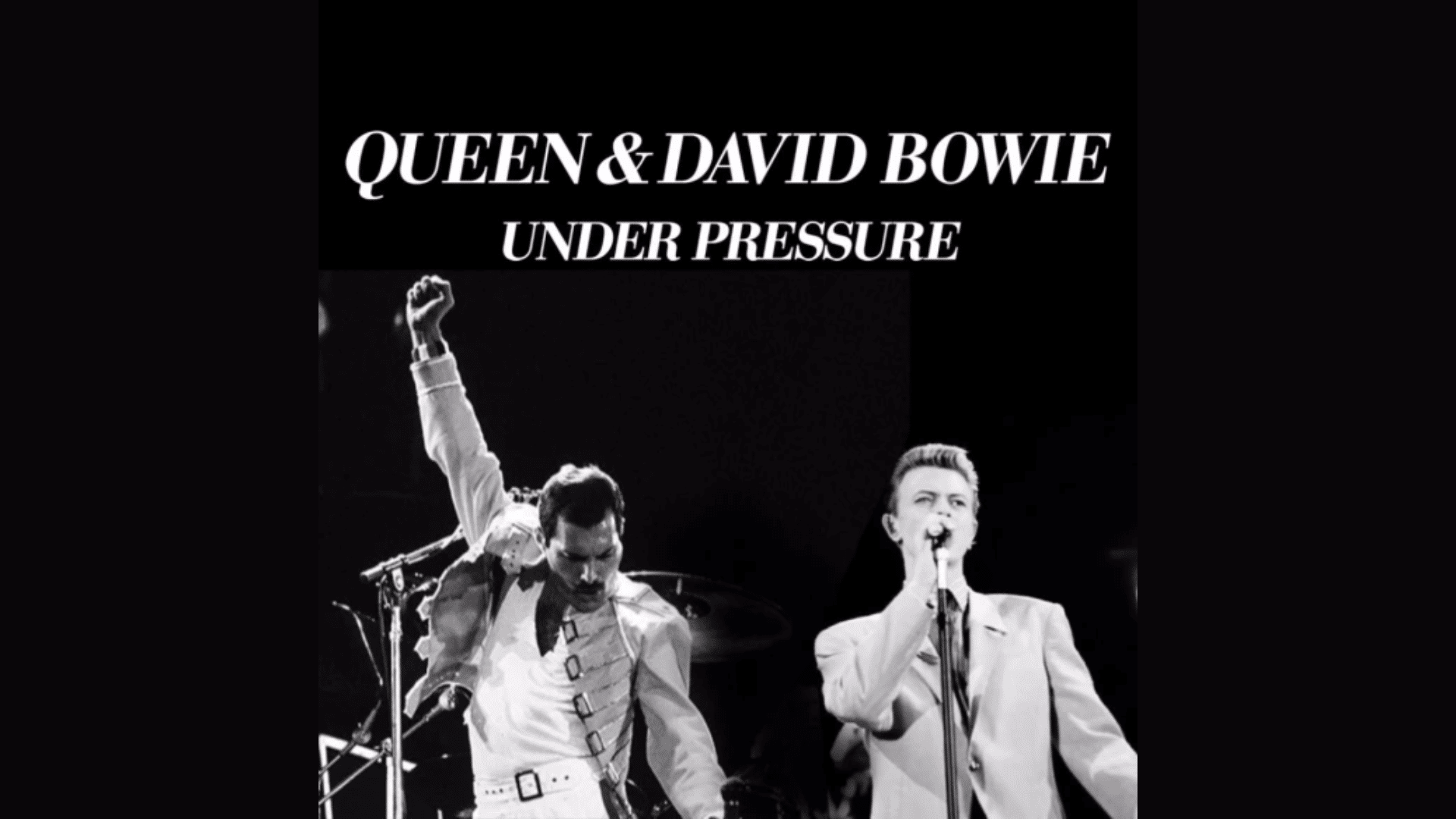
It started with wine. Lots of it. And maybe a bit of cocaine, if you believe the various biographies floating around about Mountain Studios in Montreux. What happened between under pressure david bowie and queen wasn't some calculated corporate collaboration meant to top the charts. It was a happy accident born out of a literal jam session in Switzerland in 1981.
People forget that David Bowie was just supposed to sing backing vocals on a different track called "Cool Cat." That didn't work out. He hated his performance. But instead of going home, they started messing around with a bass line. John Deacon played those seven iconic notes. Then, legendary story goes, they went out for dinner, and Deacon forgot what he played. Roger Taylor had to remind him.
That riff is everything.
It’s the heartbeat of a song that somehow manages to be both a stadium anthem and a nervous breakdown set to music. You've got Freddie Mercury’s operatic soaring and Bowie’s jagged, theatrical baritone clashing in a way that shouldn't work. But it does. Honestly, it’s a miracle the tape didn't melt from the ego in the room.
The 24-Hour Pressure Cooker in Montreux
Recording this wasn't easy. Imagine two of the most influential forces in 20th-century music locked in a small room. Queen was a democracy, which basically means they fought about everything. Bowie was a dictator. When he walked in, the power dynamic shifted. Reinhold Mack, the producer, had his hands full trying to keep the peace while the microphones were live.
They used a technique called "blind recording." Bowie and Mercury would go into the vocal booth separately and sing how they thought the melody should go without hearing what the other had done. That’s why the phrasing feels so spontaneous. It was spontaneous. Mercury’s "scat" singing—that "ba-ba-ba-be-p" stuff—wasn't scripted. He was just feeling the rhythm.
The tension was real. Brian May later admitted that it was one of the most difficult sessions he’d ever been a part of because of the clashing creative visions. Bowie insisted on being involved in the mix, which rubbed the band the wrong way. They were Queen, after all. They didn't usually take orders.
But look at the result. You get that incredible build-up. The snapping fingers. The way the piano creeps in. It captures a specific kind of 80s anxiety that still feels incredibly relevant today. We’re all under pressure. The song isn't just about the melody; it's about the weight of existence.
That Iconic Bass Line Controversy
We have to talk about Vanilla Ice. Years later, "Ice Ice Baby" used the same riff. Robert Van Winkle (Vanilla Ice) famously tried to claim they were different because he added a little "tsh" sound at the end. It was a hilarious defense. Eventually, he had to pay up. Bowie and Queen are now credited on that track, too.
But the real magic of that bass line isn't just the notes. It’s the space between them. John Deacon had a knack for creating hooks that felt like they had always existed. It’s simple. It’s primal. It gives the singers a foundation to go absolutely wild. Without that steady pulse, the song would just be a chaotic mess of high notes and snapping fingers.
What the Lyrics Actually Mean
People debate the meaning of the lyrics constantly. Is it about the Cold War? Is it about poverty? Or just the general stress of being alive? "Under Pressure" is unique because it doesn't offer a political solution. It offers a human one.
"Love's such an old-fashioned word"
When Bowie sings that line, he sounds weary. Then Freddie comes in with the "Give love one more chance." It’s a dialogue. It’s a confrontation between cynicism and hope. Most pop songs choose one side. This one forces you to sit in the middle of the conflict.
The "people on streets" section is where the song gets its grit. It grounds the theatricality of the production in the reality of the working class. It’s a protest song you can dance to. That’s a hard trick to pull off. It's why, when you hear it at a wedding or a club today, people don't just dance—they scream the words. It’s catharsis.
The Missing Music Video
Did you know Bowie and Queen never actually filmed a music video together for the song? They were both too busy. Bowie was touring, and Queen was doing their thing. The video everyone knows—the one with the clips of silent films, traffic jams, and buildings exploding—was put together by director David Mallet.
In a way, the lack of the artists' physical presence in the video made it more universal. It turned the song into a soundtrack for the human condition rather than just a promo for two rock stars. It used stock footage to show the literal pressure of modern life. It was a brilliant move, even if it was born out of a scheduling conflict.
Why Under Pressure David Bowie and Queen Changed Everything
Before this track, "collaborations" were often just one person singing a verse on someone else's song. This was a true fusion. It influenced how artists approached "feature" spots for decades. You can hear the DNA of this session in everything from indie rock to modern hip-hop crossovers.
The song reached Number 1 in the UK. Surprisingly, it didn't hit the top spot in the US immediately, though its legacy there is arguably bigger now than it was in 1981. It became a staple of Queen's live sets, though Bowie didn't perform it live until the Freddie Mercury Tribute Concert in 1992.
When Bowie performed it with Annie Lennox at that tribute, it was a moment of pure musical history. It proved the song didn't belong to just one of them. It was a shared piece of culture.
The production value for the time was also insane. They were using state-of-the-art gear at Mountain Studios, but the "soul" of the track comes from the imperfections. The slight cracks in the voices. The raw energy of a midnight session fueled by whatever was in the fridge.
Honestly, we don't get songs like this anymore. Everything is too polished now. Too many songwriters in a room trying to make a hit. "Under Pressure" was just five geniuses (including the band) fighting until something beautiful came out of the wreckage.
How to Listen Like a Pro
If you want to really hear the genius of under pressure david bowie and queen, stop listening on your phone speakers. Get some decent headphones.
- Listen for the finger snaps. They aren't perfectly in time, and that's why they feel real.
- Track the "Whooshes." There are these subtle studio effects that move from the left ear to the right ear during the bridge.
- Focus on the "Why" section. Listen to how Mercury’s voice breaks slightly when he hits the high notes toward the end. It’s pure emotion.
- Isolate the piano. It’s playing a very simple, repetitive part that builds the tension until the final explosion of sound.
The song is a masterclass in dynamics. It starts at a two, goes to an eleven, and then drops you back down to a zero with those final "this is our last dance" whispers.
Actionable Takeaways for Music Fans
If you're a musician or just a fan, there are real lessons in how this track came together.
- Embrace the Accident: The best part of the song (the bass line) was almost lost forever because the creator forgot it. Write your ideas down immediately.
- Conflict is Good: Don't be afraid of creative tension. The fact that Bowie and Queen didn't see eye-to-eye is exactly why the song has so much energy.
- Less is More: The song isn't cluttered. Every instrument has its own space. Sometimes, taking something out is better than adding something in.
- Search for the Stems: If you're a producer, look for the isolated vocal tracks of this song online. Hearing Bowie and Mercury without the music is a religious experience for any vocal nerd.
The legacy of this track isn't going anywhere. It’s been in movies, commercials, and played at every major sporting event. But at its core, it's just a document of a very weird, very stressful night in Switzerland where the stars aligned perfectly.
To truly appreciate the depth of the track, dive into the Hot Space album by Queen. While the album itself received mixed reviews at the time, "Under Pressure" stands as its crown jewel. You can also find various live versions from Queen’s 1982 "Live at Milton Keynes" performance, which shows how the band adapted Bowie's parts for the stage. For the Bowie side of things, check out his 1996 live versions where bass player Gail Ann Dorsey takes over Freddie’s vocals with staggering skill. Comparing these versions highlights how the song evolves depending on who is steering the ship.