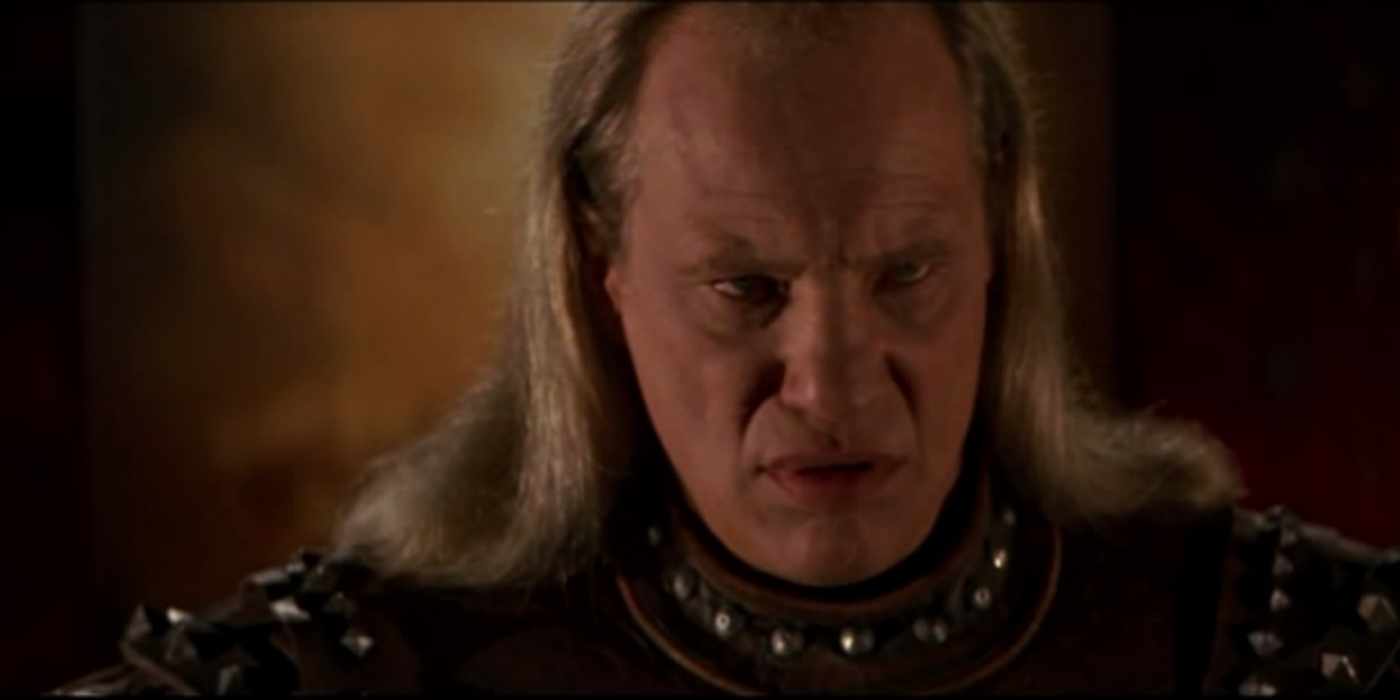
He’s the Scourge of Carpathia. The Sorrow of Moldavia. Honestly, he’s probably the reason a whole generation of kids stayed far away from the "old masters" section of their local art museum. When we talk about the painting in Ghostbusters 2, we aren’t just talking about a movie prop. We’re talking about Vigo the Carpathian, a character so visually arresting that he managed to overshadow a giant walking Statue of Liberty and a river of pink mood-slime.
Most movie villains need dialogue to be scary. Not this guy. For the first half of the film, he’s just pigment on canvas, yet he feels more present than the actual living actors. That’s the power of good practical effects and a genuinely unsettling design. But how did they actually make that thing look like it was watching you?
The Man Behind the Scowl: Wilhelm von Homburg
Before we get into the paint and the canvas, we have to talk about the face. The man in the painting in Ghostbusters 2 was Wilhelm von Homburg. He was a German boxer and actor who had a reputation for being, well, a bit of a handful on set. He didn't have many lines—mostly because his voice was eventually dubbed over by Max von Sydow—but his physical presence was undeniable.
Homburg had this incredible, craggy face that looked like it had been carved out of a mountainside. It was the perfect foundation for a 16th-century tyrant. When the production team was looking for someone who could look "unholy" while standing perfectly still, Homburg was the guy. It’s kinda ironic that his most famous role involves him not moving at all for 90% of his screen time.
The voice is another story. Max von Sydow brought a gravitas to Vigo that Homburg’s own voice allegedly lacked. When you hear that booming, "Death is but a door, time is but a window," that’s the guy who played chess with Death in The Seventh Seal. That’s a heavy-duty pedigree for a villain in a comedy about guys with nuclear backpacks.
How the Painting in Ghostbusters 2 Was Actually Created
So, was it a real oil painting? Not exactly.
The creation of the Vigo portrait was a multi-step process involving photography, painting, and early-era visual effects. Industrial Light & Magic (ILM) was responsible for making the painting come to life, but the static version seen in the gallery was a masterpiece of set decoration.
They started with a high-resolution photograph of Wilhelm von Homburg in full costume. This wasn't just a snapshot; it was a carefully lit session designed to mimic the chiaroscuro style of 16th and 17th-century European portraiture. You know the look—dark, moody backgrounds with a single light source that makes the subject's skin look like aged parchment.
Once they had the photo, a team of artists, including the legendary Glen Eytchison, worked on it. They didn't just print it out. They used a process that involved painting over a large-scale photographic transparency. This allowed them to capture the minute details of Homburg's face while giving it the texture of real oil paint. If you look closely at the high-definition restorations of the film today, you can see the "impasto" (thick paint) effect on the canvas.
The Illusion of Depth
One of the reasons the painting in Ghostbusters 2 is so effective is the way it interacts with the set. Most movie paintings look flat. Vigo looks like he’s recessed into the frame.
To achieve this, the filmmakers used a variety of tricks:
- Lighting Transitions: The DP (Director of Photography) Michael Chapman used lighting that could shift independently on the painting and the room around it. This made it look like the painting was reacting to a light source that wasn't there.
- The "Watching" Effect: This is a classic art trick where the eyes are painted looking directly at the camera. In a gallery setting, it feels like the eyes follow you. In a movie about a supernatural tyrant, it feels like he’s planning your demise.
- Practical Inserts: In scenes where Vigo’s eyes move or his face contorts, they weren't using CGI. It was 1989. Instead, they used a combination of animatronics and "live" paintings where the actor’s face was literally poked through a hole in the canvas or projected onto it.
Why Vigo is Scientifically Creepier Than Most Ghosts
There’s a concept in psychology called the "Uncanny Valley." Usually, we talk about it with robots or CGI characters that look almost human but not quite. Vigo hits this perfectly. Because the painting in Ghostbusters 2 is based on a real person, your brain recognizes it as a human face. But because it’s static and trapped in a medium that should be dead, it triggers a "something is wrong here" response.
Also, let’s talk about the slime. The "Mood Slime" (Psychomagnotheric Slime, if you want to be a nerd about it) was the catalyst for Vigo’s return. The idea that negative human emotion could manifest as a physical substance that feeds a 400-year-old sorcerer is actually a pretty dark concept for a family-friendly sequel.
The painting acts as a battery. It’s absorbing the misery of New York City and using it to bridge the gap between the canvas and reality. When Janosz Poha (played by the brilliant Peter MacNicol) stares into the painting, he’s not just looking at art. He’s looking at a physical manifestation of pure ego.
Misconceptions About the Vigo Portrait
I've heard people say that the original painting was destroyed after filming. That’s a common myth. Actually, there were several versions made for different shots. One version lived in the ILM archives for years. Another was supposedly owned by crew members.
Another weird rumor is that the painting was "cursed." While Wilhelm von Homburg was definitely a difficult personality—reportedly walking off set and having shouting matches with the director—there’s no evidence of actual supernatural shenanigans. It’s just a testament to how good the prop was that people want it to be cursed.
The Legacy of the Carpathian
Why do we still care about a painting in Ghostbusters 2 over thirty years later?
Mostly because it represents the peak of 80s practical effects. Before every movie monster was a flurry of pixels, they had to be something you could touch. You could stand in front of the Vigo painting. You could smell the paint. You could feel the weight of the frame.
That physical presence translates through the screen. When Bobby Brown’s "On Our Own" kicks in and the Ghostbusters are gearing up, the threat of Vigo feels real because he’s a tangible object in the room with them.
Actionable Takeaways for Movie Buffs and Artists
If you’re a fan of the film or an aspiring filmmaker, there are a few things you can learn from how they handled this specific prop:
- Practicality Matters: If you’re making a horror or sci-fi short, try to use a physical object as your "villain" for as long as possible. The human eye is incredibly good at detecting when light doesn't hit an object correctly. A real painting will always be scarier than a digital one.
- Character Silhouettes: Vigo is iconic because of his silhouette. The high collar, the broad shoulders, the stern gaze. When designing a character, make sure they are recognizable just by their outline.
- The Power of Sound: Remember that Max von Sydow's voice did half the work. If your visual isn't landing, check your audio. A powerful, resonant voice can make a static image feel like it’s vibrating with power.
- Visit the Sources: If you want to see what inspired the Vigo look, check out the works of painters like Rembrandt or Caravaggio. Look at how they use "lost and found" edges—where the subject's clothes disappear into the dark background. That’s exactly what the ILM artists did with Vigo.
The next time you’re flipping through channels and catch the Ghostbusters trying to save a baby from a gallery wall, take a second to really look at that canvas. It’s not just a movie prop. It’s a masterclass in how to build dread using nothing but a scowl and some very moody lighting.
If you want to dive deeper into the technical side, look up the "behind the scenes" footage from the 1999 DVD release. It shows the scale of the painting—it was massive, much larger than it looks in some of the tight shots. Seeing the actors stand next to it gives you a real sense of the "Vigo" presence that made that set so unique.