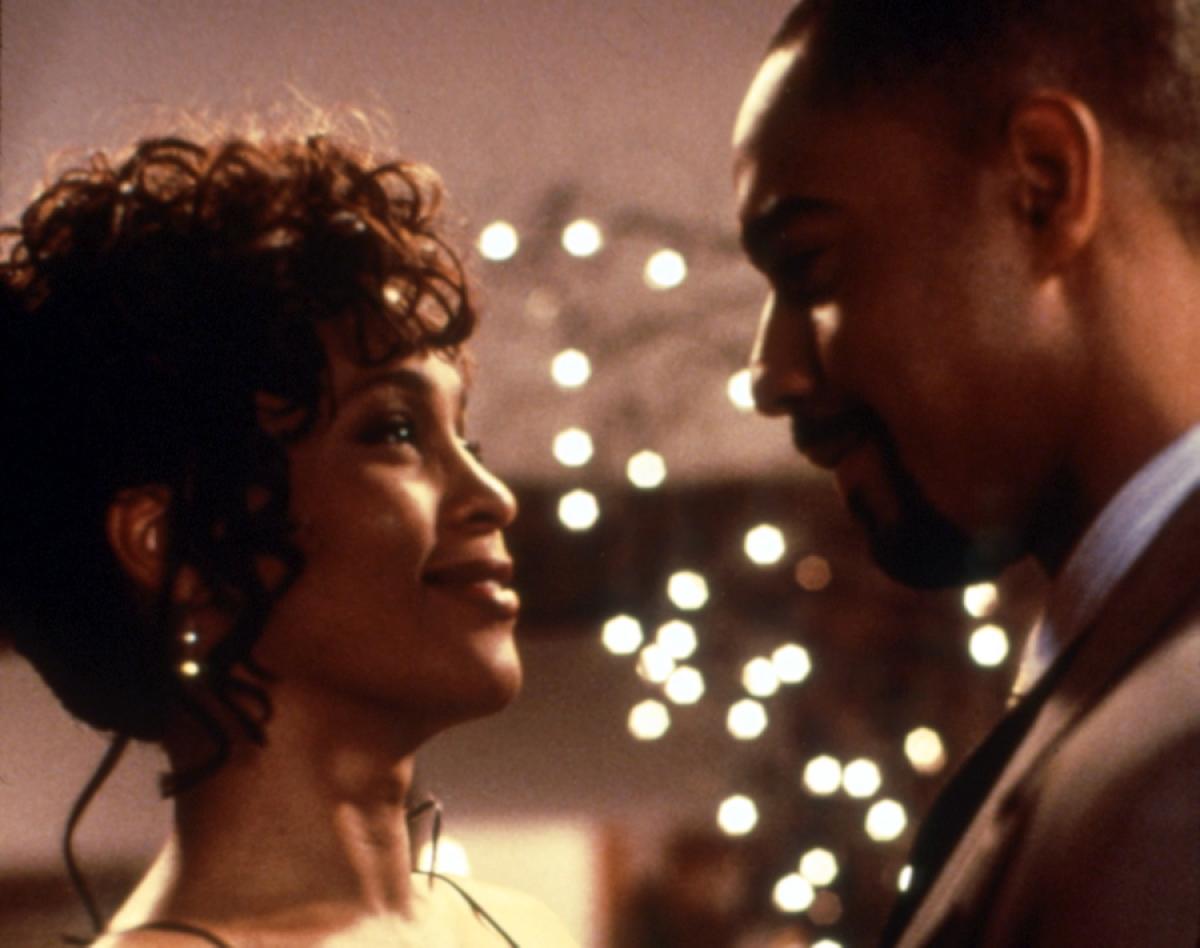
Honestly, if you haven’t seen Bernadine lighting that Mercedes on fire, have you even lived? It’s arguably the most cathartic image in 1990s cinema. When we talk about Waiting to Exhale movie scenes, that’s the one that usually jumps to mind first. The slow-motion walk away from the flames. The sheer, unadulterated rage of a woman who gave everything to a man who gave her nothing but a "goodbye" note. It’s visceral.
Forest Whitaker, in his directorial debut, didn’t just make a movie; he captured a frequency. Released in December 1995, the film adapted Terry McMillan’s 1992 bestseller and basically gave Black women a mirror they hadn't seen on the big screen in a long time—if ever. It wasn't about trauma in the way "The Color Purple" was, and it wasn't a "hood" movie. It was about middle-class life, career anxieties, and the exhausting search for a man who didn't come with a mountain of emotional baggage.
We need to talk about why these scenes still hit so hard in 2026. Is it just nostalgia? Kinda. But it’s also the chemistry between Whitney Houston, Angela Bassett, Loretta Devine, and Lela Rochon. You can't fake that.
The Fire and the Fury: Bernadine’s Revenge
Let's get into the Mercedes.
Angela Bassett is a force of nature. When Bernadine finds out her husband, John, is leaving her for his white bookkeeper, she doesn't just cry. She loses it. But it's a controlled, methodical "losing it." She goes into the closet, starts grabbing his expensive suits, his shoes, his ties. She throws them into the backseat of his pristine car.
What makes this one of the most iconic Waiting to Exhale movie scenes isn't just the fire itself. It’s the silence before the match is struck. Bassett’s face conveys a decade of sacrificed dreams. She helped him build his business. She stayed home with the kids. She was the "perfect" wife. And for what? For a man to tell her he’s "found himself" with someone else?
The scene where she sits in the car, smoking a cigarette while the garage smolders behind her, is cinematic perfection. It’s a moment of absolute release. You’ve probably seen the GIFs. You’ve definitely seen the memes. But the context matters. She wasn't just being "the crazy ex-wife." She was reclaiming her agency in a world that had written her off.
Interestingly, Terry McMillan once mentioned in an interview that the car-burning was based on a real-life impulse, though maybe not a real-life action. It tapped into a collective female frustration that transcends race, but for Black women specifically, seeing that level of defiance was revolutionary.
Savannah and the Phone Call That Never Came
Whitney Houston’s Savannah Jackson is the "successful one." She’s a high-powered television producer moving from Denver to Phoenix, hoping for a fresh start. But her Achilles' heel is Kenneth.
Kenneth is the classic "I’m gonna leave my wife" liar. We’ve all seen it. The scene where Savannah is sitting by the phone, waiting for him to call on New Year’s Eve, is heartbreakingly relatable. It’s quiet. It’s lonely. It shows the gap between her professional success and her personal emptiness.
Whitney wasn't known primarily as an actress back then, despite the massive success of "The Bodyguard." But here, she’s subtle. She plays Savannah with a sort of weary hope. When she finally realizes Kenneth is never going to show up, the way she handles that realization is a masterclass in quiet dignity. She doesn't burn a car. She just decides to stop exhaling for a man who isn't holding his breath for her.
Robin, Russell, and the "Good on Paper" Trap
Lela Rochon’s Robin is the character everyone loves to yell at through the screen. She’s gorgeous, she’s smart, but she has the absolute worst taste in men.
The scene where she’s with Russell (played by Leon) is painful. Russell is a "pretty boy" who knows exactly what to say to keep her on the hook. He’s a narcissist. He’s manipulative. He’s basically every "red flag" personified.
There’s this specific moment where Robin is trying to justify her choices to her friends. She wants the fairy tale so badly that she’s willing to ignore the fact that Russell is a loser. It’s a recurring theme in the Waiting to Exhale movie scenes—the disparity between what these women deserve and what they settle for. Robin’s journey is about realizing that her self-worth isn't tied to the man on her arm.
Honestly, the scene where she finally kicks Russell out—when he’s basically begging and trying to use his "charm" one last time—is one of the most underrated moments of growth in the film. She finally sees through the glitter. It’s not as explosive as Bernadine’s fire, but it’s just as important.
Gloria and the Finding of Love Next Door
Loretta Devine as Gloria is the soul of the movie. She’s a single mother, a business owner (that salon!), and she’s given up on romance.
Then comes Marvin.
Gregory Hines (rest in peace) played Marvin with such warmth. The scene where they are sitting in the yard, talking about life and loss, is the "exhale" the movie’s title refers to. It’s the antithesis of the toxic relationships the other three women are navigating.
Marvin doesn't want to change her. He doesn't want her to be thinner or younger or "different." He just likes Gloria. The scene where they finally go on a date—and the chemistry in that kitchen—is a reminder that healthy love exists, even when you've stopped looking for it. It’s the softest of the Waiting to Exhale movie scenes, and arguably the most hopeful.
The Soundtrack as a Character
You can’t discuss these scenes without the music. Kenneth "Babyface" Edmonds produced a soundtrack that was exclusively performed by women.
- "Exhale (Shoop Shoop)" by Whitney Houston.
- "Not Gon' Cry" by Mary J. Blige.
- "Sittin' Up In My Room" by Brandy.
When Mary J. Blige’s voice kicks in during Bernadine’s breakdown, it’s like the song is telling the story that the dialogue can’t. The soundtrack didn't just accompany the movie; it defined the era. It went 7x Platinum for a reason. Each song was tailored to the specific emotional beats of the characters. When Bernadine is walking away from that car, and you hear the soul-baring grit of Mary J., the audience feels the weight of every year Bernadine spent being "the good wife."
The Dinner Scene: Friendship as the Ultimate Romance
The climax of the film isn't a wedding or a big reconciliation with a man. It’s a birthday party.
The four women are together, celebrating Bernadine’s 37th birthday. This is the heart of the movie. They are drinking, they are laughing, they are arguing, and they are holding each other up.
One of the most poignant Waiting to Exhale movie scenes happens during this gathering. They talk about their "list" of what they want in a man. They realize the list is irrelevant because they have each other. It’s a celebration of platonic love.
There’s a specific line where Bernadine says something along the lines of how they’ve all been holding their breath, waiting for a man to complete them. And in that moment, they decide to just... breathe.
It sounds simple. It’s not. In a society that tells women their value is tied to their marital status, choosing to "exhale" together is a radical act.
Technical Mastery and Whitaker's Vision
Forest Whitaker took some heat from critics at the time for the film's "episodic" nature. They felt it was just a series of vignettes.
But that was the point.
Life isn't a straight line. It’s a series of moments—some explosive, some quiet. Whitaker used color palettes to distinguish the women’s lives. Bernadine’s world is often stark and dramatic. Gloria’s is warm and earthy. Savannah’s is cool and professional.
The cinematography by Toyomichi Kurita emphasized the beauty of these women. They were lit with a care that was often missing in 90s cinema for Black actors. Every frame of the Waiting to Exhale movie scenes feels intentional. It wasn't just a "chick flick." It was a high-budget, beautifully shot exploration of the Black female experience.
Why We’re Still Talking About It in 2026
We live in an age of "dating apps" and "situationships." The landscape has changed, but the core human desire for respect and partnership hasn't.
When people revisit these scenes today, they see:
- The importance of financial independence. Bernadine’s struggle to get her fair share of the assets is still a cautionary tale.
- The danger of the "Side Piece" trap. Savannah’s storyline is a mirror for anyone who’s ever been the "other woman" waiting for a promise that will never be kept.
- The beauty of aging. These weren't 21-year-old ingenues. These were women in their 30s and 40s with lives, kids, and histories.
There’s a reason people still do "Waiting to Exhale" themed brunch parties. There's a reason the car-burning scene is referenced in music videos (like Beyoncé’s "Lemonade" or Jazmine Sullivan’s "Bust Your Windows"). It’s a cultural touchstone.
Misconceptions About the Movie
Some people think the movie is "man-hating." That’s a shallow take.
The film doesn't hate men; it hates the behavior of the men these women chose. It actually presents a very positive male figure in Marvin. It also shows Bernadine’s father as a source of wisdom. The "villain" isn't manhood; it's the lack of integrity.
Another misconception is that it’s only for Black women. While it is specifically a Black story, the themes of betrayal, loneliness, and the power of friendship are universal. That’s why it was a box office smash, grossing over $82 million ($160+ million in today's money).
Actionable Takeaways from the Film’s Legacy
If you're looking to dive deeper into the world of these characters or find similar resonance in 2026, here is how you can apply the "Exhale" philosophy:
- Audit your "Breath-Holding": Identify the areas in your life where you are waiting for someone else's permission or presence to start living. Like Savannah, stop waiting for the phone to ring.
- Invest in "The Four": The movie's greatest lesson is that your inner circle is your safety net. Cultivate friendships that allow you to be messy, angry, and eventually, whole.
- Watch the "Directors Cut" Context: If you haven't seen the film in years, watch it again through the lens of Bernadine’s legal battle. It’s a fascinating look at 90s divorce law and community property.
- Explore the McMillan Multiverse: After re-watching the Waiting to Exhale movie scenes, read the sequel Getting to Happy. It picks up fifteen years later and shows where these women ended up. It’s a grittier, more complex look at aging.
The film ends with the women together, looking out at the horizon. They aren't "fixed." Their problems haven't all disappeared. But they aren't alone. And sometimes, in a world that tries to stifle your voice, having a group of friends who will help you scream—and then help you breathe—is the greatest happy ending of all.