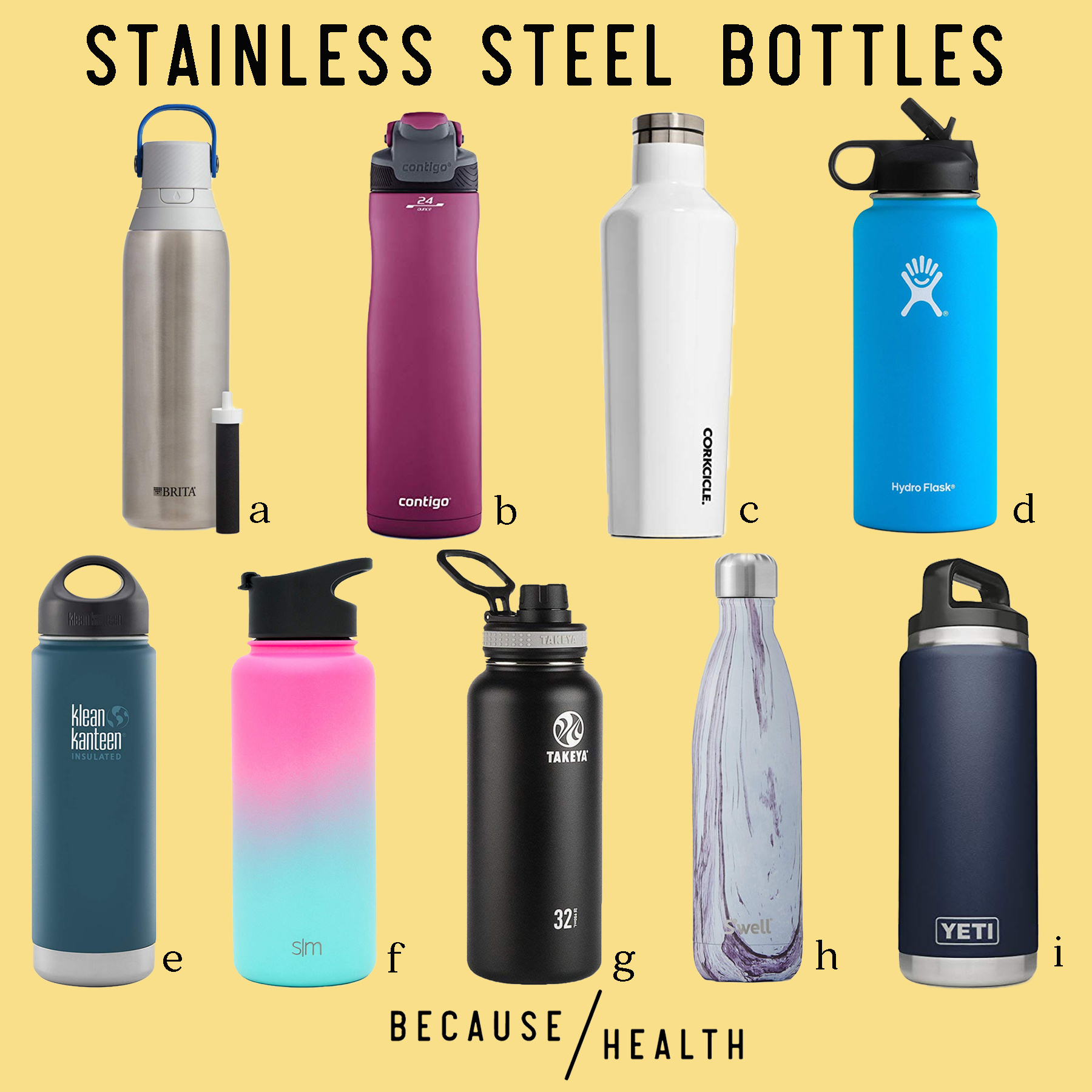
You've seen them everywhere. On desks in high-rise offices, tucked into the side pockets of hiking packs, and definitely clanging loudly onto the floor of every yoga studio in the country. We’re talking about water bottles stainless steel—those heavy, colorful, vacuum-sealed canisters that have basically become a personality trait for half the population. But honestly, beneath the trendy powder-coated finishes, there is a lot of marketing fluff to wade through.
Some of these things cost $50. That’s insane for a metal tube, right? Well, maybe. If you’re tired of lukewarm water that tastes vaguely like a Pennzoil factory, the switch to high-quality steel isn’t just about looking like an "outdoor person." It’s about the chemistry of what you're drinking.
The science of why your water tastes weird
Plastic is convenient. It’s light. But plastic is also porous. Over time, those tiny microscopic ridges in a polycarbonate bottle start to harbor bacteria and old flavors. If you’ve ever put Gatorade in a plastic bottle and then tried to drink plain water out of it three days later, you know exactly what I mean. That lingering "fruit punch" ghost is a sign that your bottle is holding onto things it shouldn't.
Stainless steel, specifically 18/8 food-grade 304 stainless steel, is non-porous. This is the gold standard. The numbers 18/8 refer to the percentages of chromium and nickel, respectively. The chromium binds to the surface to protect the iron from oxidation (rust), while the nickel adds that shiny, corrosion-resistant finish. Because it’s an inert material, it doesn't leach chemicals like Bisphenol A (BPA) or BPS into your drink, even if you leave the bottle in a hot car.
Why double-wall vacuum insulation is a game changer
Ever wonder how a bottle keeps ice solid for 24 hours? It’s not magic; it’s a vacuum. Most premium water bottles stainless steel use two walls of metal with the air sucked out from the space between them. Since heat needs a medium to travel through (conduction), and there’s no air in that gap, the heat simply stops.
It’s a thermal dead end.
This is why you can have boiling tea inside and the outside of the bottle remains cool to the touch. It also prevents "sweating." No one likes a ring of condensation ruining their mahogany desk or soaking the papers in their bag. Cheaper, single-wall steel bottles exist, but they’re basically just metal versions of plastic—they’ll get hot, they’ll sweat, and they won't keep your water crisp.
What the brands aren't telling you about durability
I’ve dropped my fair share of flasks. If you buy a bottle with a powder-coated finish—think Hydro Flask or Klean Kanteen—it’s going to chip eventually. That’s just reality. However, the structural integrity of the steel is what matters.
A "dent" in a double-walled bottle can actually be fatal to its performance. If the dent is deep enough that the inner and outer walls touch, the vacuum is compromised. Suddenly, that 24-hour cold rating drops to about two hours. You’ve basically turned your expensive flask into a heavy cup.
The lid is the weakest link
When you’re shopping for water bottles stainless steel, don't just look at the metal. Look at the plastic. Most leaks don't happen through the steel; they happen at the gasket. Brands like YETI use heavy-duty rubber O-rings that stay seated even when you toss the bottle into a gym bag.
Then there's the "straw vs. screw-top" debate. Straw lids are great for the car because you don't have to tilt your head back and lose sight of the road. But they are a nightmare to clean. If you aren't scrubbing that internal silicone valve with a pipe cleaner once a week, you are definitely drinking mold. Honestly, the simple screw-top lid is the way to go if you value hygiene over convenience. It’s a bit of a pain to unscrew every time, sure, but it’s nearly impossible to break and way easier to toss in the dishwasher.
Real talk: Is the expensive bottle actually better?
You can go to a big-box store and find a generic stainless steel bottle for $12. Or you can go to a specialty shop and pay $45 for a Stanley or an Owala. Is there a $33 difference in the water?
Probably not.
But there is a difference in the manufacturing. Higher-end brands often use a proprietary "gettering" process to maintain the vacuum longer. They also tend to use lead-free glass seals at the base. A few years back, there was a minor controversy regarding lead solder used to seal the vacuum in some stainless steel brands. While the lead was usually "encapsulated" under a stainless steel puck at the bottom and didn't touch the water, many top-tier brands have moved away from this entirely to ensure 100% safety. If you’re buying a no-name bottle from a random online marketplace, you don't always know what's happening at the factory level.
Environmental impact: The 167-bottle rule
Here’s a staggering stat: The average American uses about 167 disposable plastic water bottles a year. If you buy one of these water bottles stainless steel, you are effectively canceling out that waste. But—and this is a big but—the carbon footprint of manufacturing a stainless steel bottle is significantly higher than making a single plastic one.
You have to use your steel bottle consistently for a long time to "break even" on the environmental cost.
- Mining the ore
- The smelting process
- Shipping heavy metal around the globe
It takes a lot of energy. If you buy a new "trendy" color every six months, you aren't actually helping the planet; you're just collecting expensive metal. To truly be eco-friendly, buy one, get a color you won't hate in two years, and use it until the bottom is covered in dents.
Maintenance tips that actually work
Stop putting your "hand-wash only" bottles in the dishwasher. Even if the steel survives, the high heat can degrade the vacuum seal over time and ruin the exterior paint. Use a bottle brush. It’s a $5 investment that prevents that weird smell.
If your bottle already smells like a swamp, don't reach for the bleach. Instead, use a mix of white vinegar and baking soda. Let it fizz, let it sit for an hour, and then scrub. For stubborn stains—like if you left coffee in there for a week (we’ve all done it)—bottle cleaning tablets (like Bottle Bright) use oxygenated bubbles to lift the grime without scratching the metal.
Key features to look for before you buy:
- Width of the mouth: Can you fit standard ice cubes in there? If not, you’re going to be frustrated every morning.
- Cupholder compatibility: 32oz and 40oz bottles are great for hydration, but they won't fit in most car cupholders. If you commute, look for the "tapered" models.
- The "Clank" factor: If you hate the sound of metal on stone, get a silicone "boot" for the bottom. It protects the paint and keeps the bottle quiet.
Actionable steps for choosing your next bottle
First, figure out your "volume vs. weight" tolerance. A 64oz growler is great for a full day at the beach, but it's a literal brick if you’re trying to go for a light hike. Most people find the 24oz or 32oz sizes to be the "Goldilocks" zone—enough water to last a few hours, but not so heavy that it stays on the kitchen counter.
Second, check the warranty. One reason brands like Klean Kanteen or YETI charge a premium is their lifetime or multi-year warranties. If the vacuum seal fails and your bottle starts sweating, they’ll often ship you a brand-new one for free. That alone covers the extra $20 you spent upfront.
Lastly, don't overthink the "copper lining" marketing. Some brands claim a copper layer inside the vacuum helps with heat retention. While technically true in a lab setting, in the real world, you’re looking at a difference of maybe 30 minutes of ice retention over a 24-hour period. It’s not worth paying double for. Stick to the basics: 18/8 steel, a solid lid, and a size that actually fits your life.
Stop buying plastic. Get one good bottle. Keep it for a decade. It’s better for your wallet, your health, and the planet. Just try not to drop it in a quiet library.