Most people think of We Bought a Zoo as just another feel-good Matt Damon flick from the early 2010s. You know the vibe—sweeping scores, golden hour lighting, and a grieving dad finding his soul again by feeding a tiger. It feels like a Hollywood fever dream. But the wild part? It actually happened. Well, mostly.
Benjamin Mee didn't just wake up and decide to buy a tiger on a whim because he looked like a movie star. He was a DIY columnist for The Guardian. He was a guy who liked fixing things. When he moved his family into Dartmoor Zoological Park in 2006, it wasn't a shiny California estate like the movie depicts. It was a crumbling, bankrupt mess in the English countryside. The reality of the "zoo" was far grittier than the cinematic version, and honestly, that makes the real story way more interesting than the script.
The Massive Gap Between Hollywood and Devon
If you watch the movie, you see the Mee family struggling with the logistics of a North American zoo. In real life, Benjamin Mee, his wife Katherine, his two kids, and even his mother moved into a dilapidated site in Devon, England. The movie moves the timeline around, too. In the film, Benjamin is already a widower. In reality, Katherine was still alive when they moved in, though she was battling a brain tumor. She passed away shortly after they arrived. That’s a heavy layer of grief that the movie simplifies for the sake of a two-hour runtime, but it’s the core of why Benjamin stayed. He had to make it work.
The animals were almost an afterthought compared to the paperwork. Imagine trying to get a license to operate a facility that houses lions and bears when you’ve never even owned a particularly difficult dog. That was Benjamin's life. He wasn't just worried about "Sparing No Expense," as John Hammond might say; he was worried about the local council shutting him down before the first visitor could even buy a ticket.
The Dartmoor Zoological Park was literally days away from the animals being destroyed because no one could afford to keep them. When Benjamin bought it for about 1.1 million pounds, he wasn't buying a business. He was buying a massive, hungry, dangerous responsibility.
Why We Bought a Zoo Works (And Why It Doesn't)
Director Cameron Crowe has a very specific style. He loves the "human moment." He loves the soundtrack. If you've seen Almost Famous or Jerry Maguire, you know he's the king of the earnest monologue. Putting that lens on a story about a zoo was a bold choice. Some critics at the time felt it was too "saccharine." Maybe it was. But if you look at the box office and the way people talk about it today, it clearly struck a chord.
Why?
Because it's not actually about the zoo. It's about the "20 seconds of insane courage" line. That’s the takeaway everyone remembers.
"You know, sometimes all you need is twenty seconds of insane courage. Just literally twenty seconds of just embarrassing bravery. And I promise you, something great will come of it."
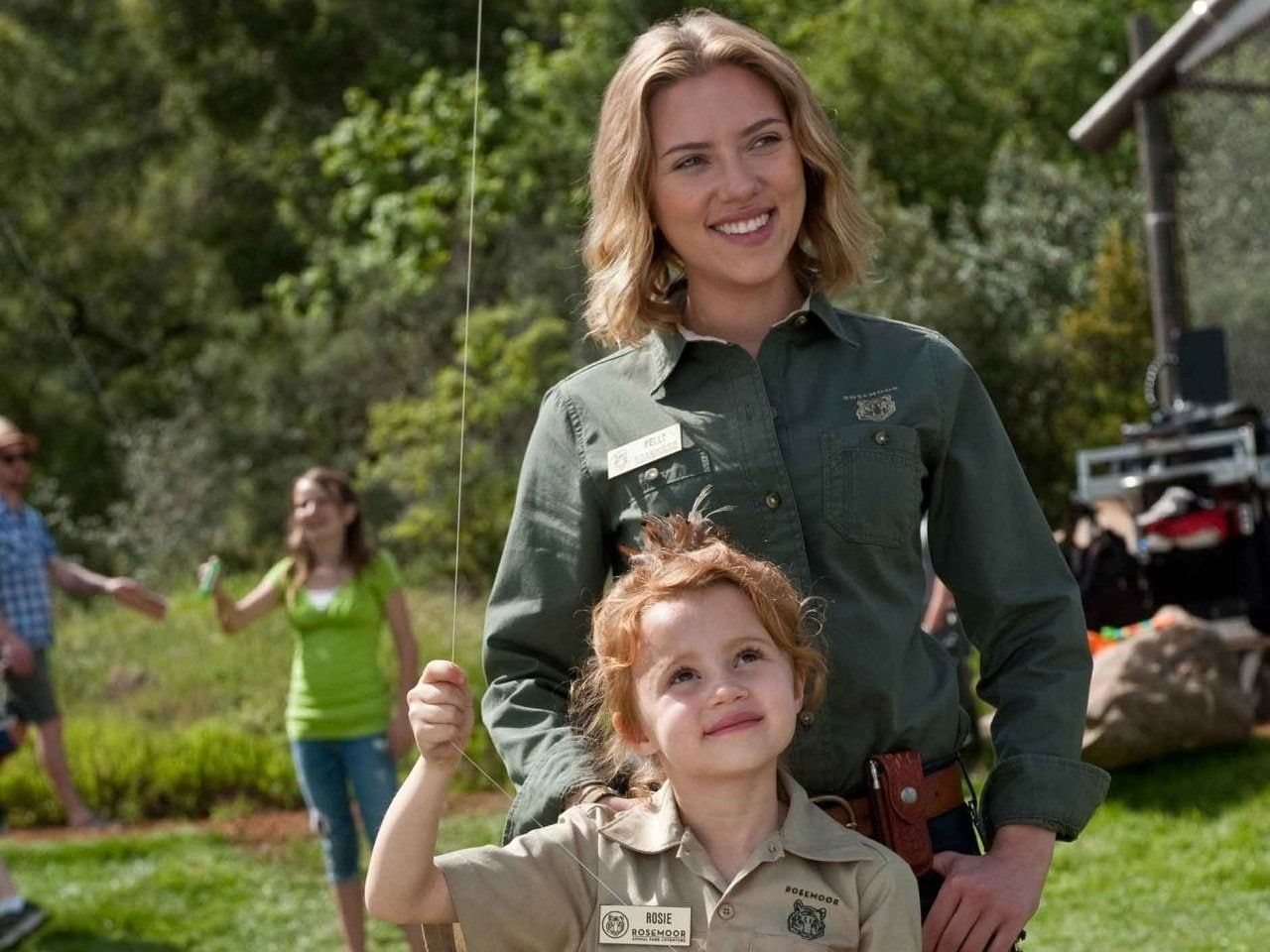
It’s a great line. Is it realistic advice for someone facing a grizzly bear? Probably not. But for someone stuck in a dead-end job or grieving a loss? It’s exactly what they need to hear. Matt Damon plays Benjamin with this simmering, quiet desperation that feels authentic, even if the setting is a bit polished. Scarlett Johansson as Kelly Foster is the "pro" who keeps things grounded, representing the actual zookeepers who do the hard, unglamorous work of cleaning stalls and managing diets.
The Animals Were the Real Stars
Let's talk about the tigers. Spar. In the movie, Spar is the aging patriarch of the zoo, a Bengal tiger whose declining health represents Benjamin’s inability to let go of his wife. In real life, Spar was a real tiger at Dartmoor. The connection between the keepers and these apex predators is something the movie actually gets right. You don't just "own" a tiger; you enter into a weird, respectful, and terrifying relationship with it.
The film used real animals, which you don't see as much anymore in the age of CGI like The Lion King remake. There's a weight to a real lion on screen. You can see the dust in its fur. You see the way its eyes actually track movement. This gives the movie a tactile feel that keeps it from floating away into total melodrama.
The Financial Nightmare Nobody Mentions
Hollywood glosses over the "business" side of We Bought a Zoo. In the real world, the Dartmoor Zoo was a money pit. Benjamin Mee has been very open about the fact that they were constantly on the brink of ruin. Even after the book became a bestseller and the movie became a hit, the zoo struggled. It’s a non-profit now, a charity. That’s the only way it survived.
People think that because a movie was made about your life, you’re set for life. Not true. Benjamin poured his resources back into the enclosures and the conservation efforts. He became a huge advocate for research into how interacting with animals can help people with mental health issues.
The Cultural Legacy: Why We're Still Talking About It
It’s been over a decade. Most mid-budget dramas from 2011 have been swallowed by the streaming void. Yet, We Bought a Zoo persists. It’s a staple on cable and a "comfort watch" for millions.
Maybe it’s because the world feels increasingly digital and fake, and the idea of buying a physical, messy, roaring piece of land is the ultimate fantasy. Or maybe it's just that the theme of "starting over" is universal. We’ve all wanted to blow up our lives and do something ridiculous. Benjamin Mee actually did it.
Common Misconceptions
- The location: It wasn't in California. It was in Devon, England.
- The kids: Benjamin’s kids were younger in real life than they were portrayed by Colin Ford and Maggie Elizabeth Jones.
- The romance: The relationship between Benjamin and the head keeper (Scarlett Johansson's character) was largely a Hollywood invention to add a "moving on" arc.
What You Can Actually Learn from Benjamin Mee
If you’re looking at this story and thinking, "I want to do that," take a breath. Buying a zoo is a logistical nightmare involving international transport laws, specialized veterinary care that costs more than a luxury car, and the constant threat of being eaten.
But there are actionable takeaways from the We Bought a Zoo saga that apply to normal life:
Do the "20 Seconds" Audit
Think about a decision you’re stalling on. Is it a conversation? A job application? A move? Most of these don't require a lifetime of bravery. They require a momentary burst of "forgetting to be afraid." If you can push through the first 20 seconds of the "scary thing," the momentum usually carries you the rest of the way.
Research the "Boring" Parts First
Mee’s success didn't come from loving tigers; it came from learning how to manage a staff and satisfy a safety inspector. Whatever your "zoo" is—a small business, a new career, a massive renovation—the passion gets you in the door, but the boring stuff (regulations, taxes, maintenance) keeps the doors open.
Conservation is Local
You don't need to buy a zoo to help. The Dartmoor Zoo survived because the local community rallied around it. If you care about wildlife, look at local sanctuaries or rehabilitation centers. They are almost always underfunded and need volunteers or specific supplies more than they need a viral social media post.
Embrace the Mess
The biggest lesson from Benjamin Mee is that life is messy. You can't plan for a broken fence or a sick animal any more than you can plan for grief. The goal isn't to have a perfect, polished life; it's to have a life that's worth the struggle.
The story of We Bought a Zoo is essentially a reminder that the most "unrealistic" things are often the most true. Benjamin Mee is still involved with the Dartmoor Zoological Park. The animals are still there. The struggle is still real. And every once in a while, it’s worth being a little bit crazy.