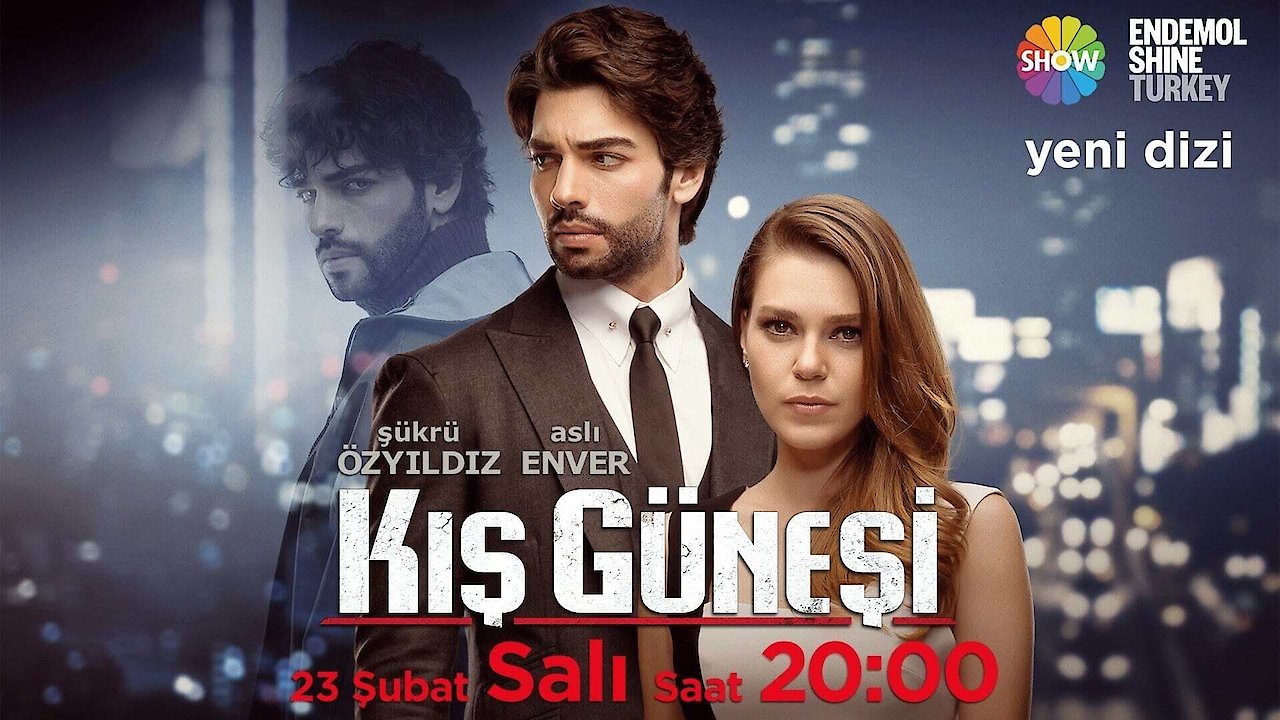
Winter Sun (Kış Güneşi) hit the screens back in 2016 and honestly, it felt like a fever dream for anyone obsessed with Turkish dizis. You’ve got Şükrü Özyıldız playing twins—one a wealthy, cold businessman and the other a humble fisherman—and the chemistry with Aslı Enver was just... chef's kiss. But if you look at the ratings from when it first aired on Show TV, you'd think it was a flop. It wasn't. Not really. It just got caught in a brutal broadcast cycle where viewers were distracted by massive historical epics. Years later, people are still hunting for it on streaming platforms because the story hits different when you aren't waiting a week between cliffhangers.
The show basically revolves around Efe and Mete.
They’re twins separated by a traumatic hit-and-run that kills their father. Fast forward twenty years, and the "poor" twin, Efe, witnesses the "rich" twin, Mete, get murdered. It's dark. It's messy. Efe then has to step into his dead brother's shoes to find the killers, essentially gaslighting his entire family and his brother's wife, Nisan, into thinking he’s the same man.
The Winter Sun Turkish Series: A Masterclass in the Identity Trope
What makes this specific show stand out among the dozens of Turkish dramas exported to Latin America and the Middle East? It's the pacing. Most dizis suffer from what I call "the 140-minute bloat." You know the vibe—ten minutes of two people staring at each other while a violin weeps in the background. Kış Güneşi was produced by Endemol Shine Turkey, and they brought a slightly more Westernized, punchy editing style to the table. It moved fast. Maybe too fast for the local Turkish audience at the time, but perfect for a global binge-watch.
Şükrü Özyıldız had a massive task here. Playing twins is a trope as old as time, but he managed to make Efe and Mete feel like entirely different souls even when they were dressed in the same expensive Italian suits. You can see it in the eyes. Efe has this rugged, confused vulnerability, while the brief glimpses we get of the original Mete show a man hardened by corporate greed and a loveless marriage.
And then there's Aslı Enver.
She plays Nisan. If you’ve seen her in İstanbullu Gelin, you know she’s the queen of nuanced crying. In Winter Sun, she’s stuck in this psychological limbo. She knows her husband (who is actually his twin) feels different, smells different, and looks at her differently, but she can't put her finger on why. It creates this unbearable tension. You're rooting for them to fall in love, but you're also terrified because their entire relationship is built on a corpse and a massive lie.
Why the Revenge Plot Actually Works
Most revenge dramas get bogged down in the logistics of the "plan." Winter Sun focuses more on the emotional toll of living a double life. When Efe returns to the lavish estate, he isn't just seeking justice for his father’s death; he’s mourning a brother he never got to know.
The villains aren't cartoonish either.
Seda Bakan plays Burcu, and she brings a layer of complexity that’s often missing from the "other woman" archetype. The show treats its antagonists as people driven by fear and legacy rather than just pure evil. This is a hallmark of the director, Murat Onbul, who has a knack for making tight, atmospheric scenes that feel claustrophobic even in wide shots of the Istanbul skyline.
The Production Quality and That Iconic Soundtrack
Let's talk about the aesthetic. Istanbul in winter is a vibe. The grey skies, the heavy overcoats, and the Bosphorus looking like hammered lead—it all serves the "Winter Sun" title perfectly. It’s cold. It’s beautiful. The cinematography doesn't rely on the bright, saturated colors of a summer rom-com (yaz dizisi). It’s moody.
The music? Alp Yenier handled the score. If that name sounds familiar, it’s because he’s the backbone of Turkish TV music, having worked on Justice (Yargı) and The Family (Aile). The main theme is haunting. It stays with you. It’s the kind of music that makes you want to walk dramatically through a rainy street thinking about your long-lost twin.
Honestly, the show was ahead of its time.
In 2016, the Turkish market was dominated by shows like Diriliş: Ertuğrul. Everyone wanted swords and horses. A psychological thriller about identity theft and corporate espionage felt a bit "too much" for the Tuesday night slot. But looking back, it paved the way for the "New Wave" of Turkish series that eventually took over Netflix, like The Protector or The Gift.
Dealing With the Cancellation Blues
We have to address the elephant in the room: the ending. Because the ratings in Turkey weren't hitting the targets, the show was wrapped up in 18 episodes. In the world of Turkish TV, that’s a short run. Some fans felt the ending was rushed, and yeah, they aren't wrong. The final confrontation happens fast. However, because it's only 18 episodes (which are divided into about 50 episodes on international platforms like YouTube or Netflix), it’s actually more digestible for a global audience. There’s no filler. No weird subplots about the neighbor’s cousin’s wedding that lasts three episodes. It’s lean.
How to Watch and What to Look For
If you’re diving into the winter sun turkish series for the first time, don't watch the dubbed versions if you can help it. The vocal performances of the original cast are too good to lose. You need to hear Şükrü’s voice change when he’s pretending to be Mete. You need to hear the tremor in Aslı’s voice.
- Look for the chemistry: The "will they/won't they" between Efe and Nisan is the heart of the show.
- The clues: The first three episodes are packed with visual foreshadowing that you only catch on a second watch.
- The fashion: Seriously, the costuming for the wealthy Sancaktar family is a masterclass in 2010s Turkish high-fashion.
People often compare it to Kara Sevda (Endless Love) because of the revenge theme, but Winter Sun is less of a melodrama and more of a noir. It doesn't want you to cry every five minutes; it wants you to be anxious. It wants you to feel the weight of Efe’s secret.
The Legacy of Kış Güneşi in 2026
It’s funny how time changes things. Back then, it was a "disappointment" in terms of domestic numbers. Today, it’s a cult classic. It’s one of the most requested titles on international forums. It proved that Turkish creators could do psychological suspense just as well as they do sweeping romances.
If you’ve already burned through The Tailor or Another Self on Netflix, going back to Winter Sun is like finding a hidden treasure. It’s the bridge between the old-school Turkish soap opera and the modern, high-budget psychological thrillers we see today.
Stop sleeping on this one. The 18-episode commitment is nothing compared to the 80-episode marathons of other series. It’s a tight, emotional ride that proves sometimes, the sun is brightest in the middle of winter.
Your Next Steps for the Best Experience:
Don't just jump into a random YouTube upload with 360p resolution. Look for the official Endemol Shine Turkey channel or reputable streaming services that offer the remastered HD versions. The cinematography is half the experience, and you lose that in low quality. Start with the first two episodes back-to-back to get past the initial setup of the accident; once Efe enters the household as his brother, that's when the hook really sinks in. If you find yourself confused by the family tree (Turkish dramas love a complex web of in-laws), keep a quick note of who works for whom in the first hour. It pays off when the corporate betrayals start flying in the second half of the season.