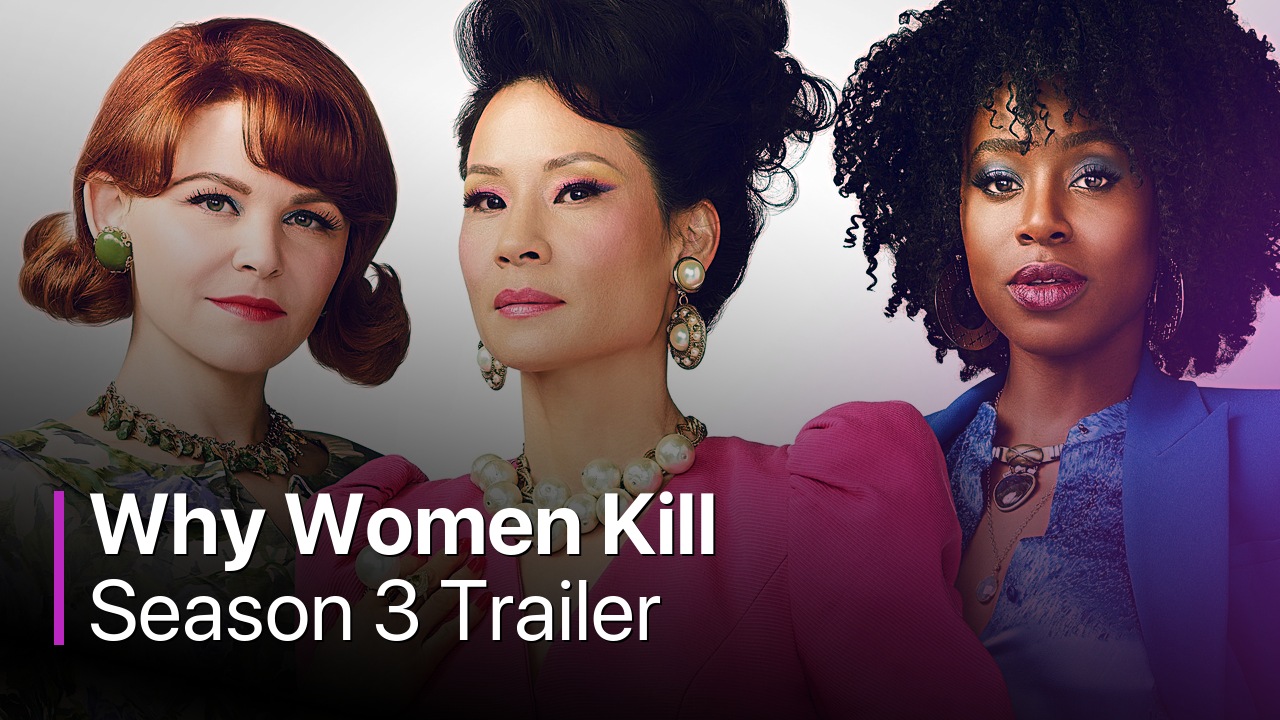
Marc Cherry has a thing for beautiful houses and the dark secrets rotting inside them. If you’ve binged the first season of Why Women Kill, you know exactly what I’m talking about. While the show follows three different decades, it’s the 1980s storyline—the one with the big hair, the neon spandex, and the tragic fate of Tommy Harte—that usually leaves people scrolling through Reddit at 2:00 AM asking for clarification.
He didn't die. Well, not in the way the title suggests.
It’s a bit of a trick, honestly. When you start a show called Why Women Kill, you’re basically waiting for a body count. You see Tommy, the young, persistent, and somewhat reckless neighbor played by Leo Howard, and you assume he’s headed for a coffin. The tension between him and Simone Grove (played by the incomparable Lucy Liu) is electric, messy, and deeply illegal in most states. But if you’re looking for a murder scene involving a knife or a gun aimed at the kid next door, you’re looking at the wrong character.
The Simone and Tommy Dynamic: Why Everyone Worried
Let’s be real. Simone Grove is a powerhouse. She’s wealthy, curated, and terrified of social embarrassment. When she discovers her husband, Karl, is gay, her world doesn’t just crack—it shatters. Enter Tommy. He’s eighteen. He’s her best friend’s son. He’s been in love with Simone since he was probably old enough to ride a bike without training wheels.
The show plays with our expectations. In a series where women are pushed to the brink of homicide, the "why" usually involves betrayal. Tommy represents a different kind of catalyst. He isn’t the victim of a killing; he’s the reason Simone finds a different kind of strength, even if the path there is littered with bad decisions and a very scandalous art gallery opening.
What Really Happened to Tommy in the Finale?
People often ask why women kill Tommy because they expect the show’s title to be a literal checklist for every male lead. But the 1980s ending is the "sweetest" of the three, if you can call a story involving a terminal illness and a statutory affair sweet.
Tommy doesn't die.
In the final episode of Season 1, there’s a massive time jump. We see Simone years later. She’s older, still fabulous, but the fire is different. We learn that Tommy survived his youth, survived the heartbreak of Simone choosing her husband over him, and went on to live a full life. He becomes a successful artist. He travels. He carries the "S" tattoo—a permanent reminder of his first obsession—but he isn't a corpse.
The person who actually dies in that timeline is Karl.
The "kill" in the 1980s segment is an act of mercy. It’s an assisted suicide. Karl is dying of AIDS, a brutal and factual reality of the era the show depicts. Simone helps him pass away peacefully before the disease takes the last of his dignity. Tommy is simply the boy who had to grow up and realize that some loves are meant to be a chapter, not the whole book.
The Misconception of the Title
The confusion usually stems from how the marketing framed the show. We were promised three murders. We got them.
- 1960s: Beth Ann orchestrates a brilliant, hands-off murder of her abusive husband.
- 2010s: Taylor and Eli deal with the fallout of Jade, which ends in a very literal, bloody kitchen struggle.
- 1980s: Simone "kills" Karl.
Tommy is a red herring. He’s the person we think might get caught in the crossfire because he’s young and impulsive. Remember that scene where he gets into a car accident? The showrunners wanted you to think that was it. They wanted you to think his mother, Naomi, might actually be the one to do the deed after she finds out about the affair. Naomi goes full "suburban psycho," attempting to run Simone down with a car, but Tommy intervenes.
Why the 1980s Storyline Hits Different
There’s a lot of nuance in how Marc Cherry handled this. In the 60s and the modern era, the men (and one woman) who die are generally portrayed as villains or deeply flawed people who brought about their own destruction. Karl, despite his lies, becomes a sympathetic figure. Tommy, despite being the "forbidden fruit," is just a kid in love.
If Simone had killed Tommy, it would have turned Why Women Kill into a much darker, much more predatory show. Instead, by keeping him alive, the writers allowed the 80s segment to be about growth. Simone learns that she can’t just buy happiness or keep a young man tethered to her forever.
Key Details Most Viewers Miss
- The Age Gap: People often forget Tommy just turned 18 when the physical part of the affair started. It’s still ethically murky, but the show treats it as a "coming of age" for him and a "coming to terms" for her.
- The Art: Tommy’s talent wasn't just a plot device. It was his ticket out of the suburban drama. His success as an artist in the finale proves that Simone was a muse, not a murderer.
- Naomi’s Rage: If anyone was going to kill Tommy, it was almost his own mother by accident. Her vengeful streak against Simone put her own son in the hospital.
Actionable Insights for Fans and Writers
If you're dissecting Why Women Kill for a film study or just arguing about it over drinks, keep these points in mind.
Understand the Genre subversion. The show thrives on taking the "Desperate Housewives" trope and turning the dial to eleven. It uses the title to create a "Whodunnit" atmosphere, but the 1980s plotline proves that "killing" can sometimes be an act of love or a metaphor for ending a stage of life.
Watch for the color cues. In the 1980s scenes, notice how the colors shift. When Tommy and Simone are at their peak, everything is vibrant, neon, and high-contrast. As Karl’s health declines and Tommy has to move on, the palette softens. It reflects the transition from passion to reality.
Context matters. You can't talk about Tommy without talking about the AIDS crisis. The reason Tommy lives is so the show can focus on the gravity of Karl’s death. Having two deaths in that timeline would have diluted the emotional impact of Simone and Karl’s final dance.
The reality is that Tommy Harte is one of the few characters who actually gets a "happy" ending in this series. He gets the girl (temporarily), he gets the career, and most importantly, he gets to keep breathing. If you're looking for why women kill him, you're going to be looking for a long time—because in the world of Simone Grove, he was the one thing worth saving.
Check out the series on Paramount+ if you want to see the exact moment Naomi loses her mind, or if you just want to appreciate the costume design, which is, frankly, the fourth main character of the show.