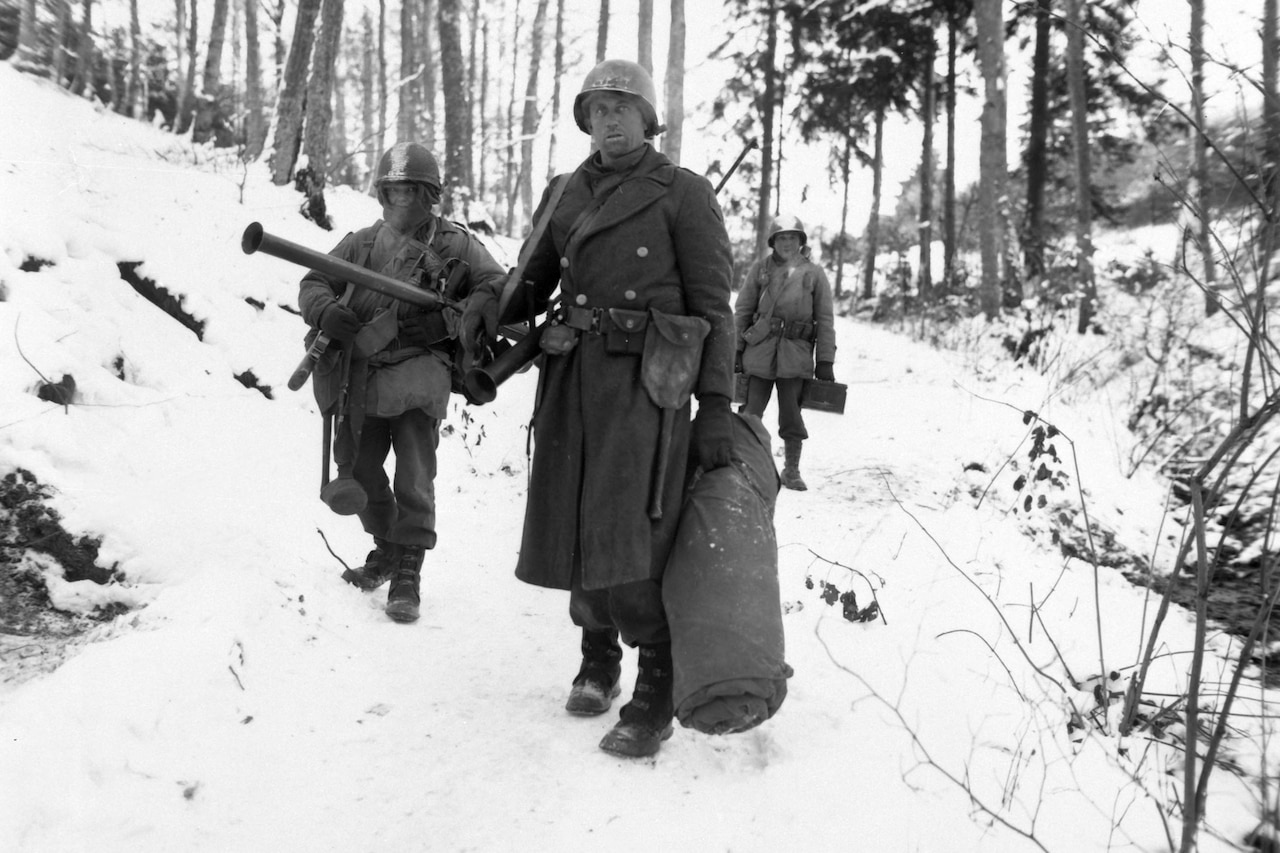
History is usually just ink on paper until you see the mud. You’ve probably seen a thousand world war 2 battle pictures in your life, but most of them fly by without sticking. It's the grainy, blurred ones that get you. The ones where the camera shutter clicked just as a shell hit or a soldier stumbled. These aren't just "content." They’re frozen moments of a world literally tearing itself apart.
We look at them now through high-resolution screens. It’s weird. We’re sitting in climate-controlled rooms looking at men who were freezing in the Ardennes or melting in the Pacific.
Honestly, some of these photos shouldn't even exist. The technology was basic. The film was volatile. Developing a roll of film in a jungle or a foxhole is a nightmare scenario for any photographer. Yet, here they are. They changed how we see war forever. Before 1939, war was often painted. It was heroic. Large canvases showed generals on horses. But world war 2 battle pictures brought the dirt and the fear right to the breakfast table.
The Men Behind the Lens
Robert Capa is the name everyone knows. He famously said, "If your pictures aren't good enough, you aren't close enough." He wasn't kidding. Capa jumped with paratroopers and landed with the first wave on Omaha Beach.
The "Magnificent Eleven" are his most famous shots. He took 106 photos during the D-Day landings. A darkroom assistant in London got too excited, turned up the heat on the drying rack, and melted almost all of them. Only eleven survived. They’re blurry. They’re shaky. And they are perfect. They capture the sheer, disorienting chaos of landing under heavy fire better than any high-def movie ever could.
But it wasn't just Capa. You had Margaret Bourke-White, the first female war correspondent allowed to work in combat zones. She was on a ship that got torpedoed. She saw the liberation of Buchenwald. Her photos didn't just show battles; they showed the aftermath, which is often way more haunting. Then there were the anonymous Signal Corps photographers. Thousands of men whose names we don't know, carrying Speed Graphics and Rolleiflexes into the line of fire.
The gear was heavy. A Speed Graphic is a beast of a camera. It uses large-format sheets of film. You get one shot, then you have to swap the holder. Imagine doing that while someone is literally shooting at you. It’s insane.
Why Authentic World War 2 Battle Pictures Look Different Today
When you scroll through world war 2 battle pictures today, you’ll notice a lot of "colorized" versions. People love them because they make the past feel "real." But there's a debate there.
Historians like those at the Imperial War Museum often prefer the original black and white. Why? Because colorization is always an interpretation. It’s an artist guessing what shade of olive drab a jacket was. The original silver halide crystals on the film—that’s the actual light from 1944. It’s a physical record.
There’s also the issue of staging.
Not every famous photo is 100% "candid." Take the flag-raising on Iwo Jima by Joe Rosenthal. It was real, but it was the second flag raised that day. The first one was smaller. The iconic photo we all know was a later moment caught perfectly. It doesn't make it "fake," but it shows that world war 2 battle pictures were used for propaganda as much as for journalism. Both sides did it. The Soviets were masters of it. The famous photo of the Red Army raising their flag over the Reichstag in Berlin? That was staged for the camera, and they even had to edit out some extra watches on the soldiers' wrists because it looked like they’d been looting.
The Technical Nightmare of Combat Photography
Basically, the tech was working against them.
Kodachrome existed, but it was rare and slow. Most photographers used black and white because it was faster and more forgiving. You needed a fast shutter speed to freeze motion. If you’re in a gray, overcast forest in Belgium during the Battle of the Bulge, there’s no light. Everything comes out underexposed.
And then there’s the storage.
Film hates moisture. In the Pacific theater, the humidity was so high that fungus would literally grow on the camera lenses. It would eat the glass coatings. Photographers had to keep their film in sealed tins and pray the heat wouldn't ruin the emulsion before they could ship it back to Hawaii or Australia for processing.
The Most Intense Locations Captured on Film:
- The Eastern Front: Often overlooked in Western textbooks, but the scale was massive. German and Soviet photographers captured urban warfare in Stalingrad that looks like a post-apocalyptic movie.
- The Pacific Islands: Intense sunlight, white sand, and deep shadows. This created high-contrast photos that feel incredibly harsh.
- The Aerial War: Cameras were mounted in the bellies of B-17s. These pictures show "flak gardens"—the terrifying puffs of black smoke from anti-aircraft fire.
Reading Between the Lines
You have to look at the edges of world war 2 battle pictures.
Look at the faces of the people in the background. Often, the "subject" of the photo is a tank or a general. But look at the civilians standing in the rubble. Or the exhausted medic leaning against a wall. That’s where the real story lives.
There's a famous photo of a "thousand-yard stare" soldier. It’s a close-up. His eyes are just... gone. He’s looking through the camera, through the photographer, through you. That kind of imagery changed the public's perception of "shell shock," which we now call PTSD. For the first time, people back home saw that the "glory" of war was a myth.
The censorship was also huge. For the first few years of the war, the US government wouldn't allow photos of dead American soldiers to be published. They were afraid it would kill morale. That changed in 1943 when Life magazine published a photo of three American soldiers dead on Buna Beach. It was a turning point. The public needed to see the cost.
How to Properly Archive and View These Images
If you're looking for world war 2 battle pictures for research or just out of interest, don't just use a random image search. You'll get low-res, cropped versions.
Go to the primary sources. The National Archives (NARA) in the US has a massive digital collection. The Imperial War Museum (IWM) in the UK is incredible for the European perspective. The Bundesarchiv in Germany holds many of the photos taken from the other side of the wire.
When you look at these, check the captions. A real archival photo will have a date, a location, and often a unit designation. If it doesn't have those, be skeptical. There are a lot of "re-enactment" photos circulating online that people mistake for the real thing. Re-enactors are great, but their gear is usually too clean. Real world war 2 battle pictures show clothes that are ripped, greasy, and ill-fitting.
What These Pictures Teach Us Now
We live in an age of "deepfakes" and AI-generated imagery. It’s getting harder to know what’s real. That makes these 80-year-old physical artifacts even more valuable. They are a "tether" to reality.
They remind us that these were real people. Not characters in a movie. Not "units" in a game. They were 19-year-olds who were terrified.
The next time you see world war 2 battle pictures, don't just look at the explosions. Look at the mud on the boots. Look at the way a soldier holds a letter from home. Those details are the only way we can actually understand what happened.
Actionable Ways to Explore History Through Imagery
- Visit Local Archives: Many small-town libraries have photos of local veterans that were never published nationally. These offer a more personal connection to the global conflict.
- Support Digitization Projects: Physical film is degrading. Organizations like the World War II Foundation work to preserve these reels before they turn to dust.
- Learn the Geography: Use tools like Google Earth to look at the locations in the photos today. Seeing a peaceful French village alongside a 1944 photo of the same street in ruins is a powerful way to process history.
- Cross-Reference with Oral Histories: Find a photo of a specific battle and then look for a veteran's diary or interview about that day. Matching the visual with the verbal narrative provides a 3D view of the event.
The power of world war 2 battle pictures isn't just in what they show, but in what they prevent us from forgetting. They are the ultimate "receipt" of the 20th century's greatest tragedy. Keep looking at them. Keep questioning them. Most importantly, keep remembering the people on both sides of the lens.