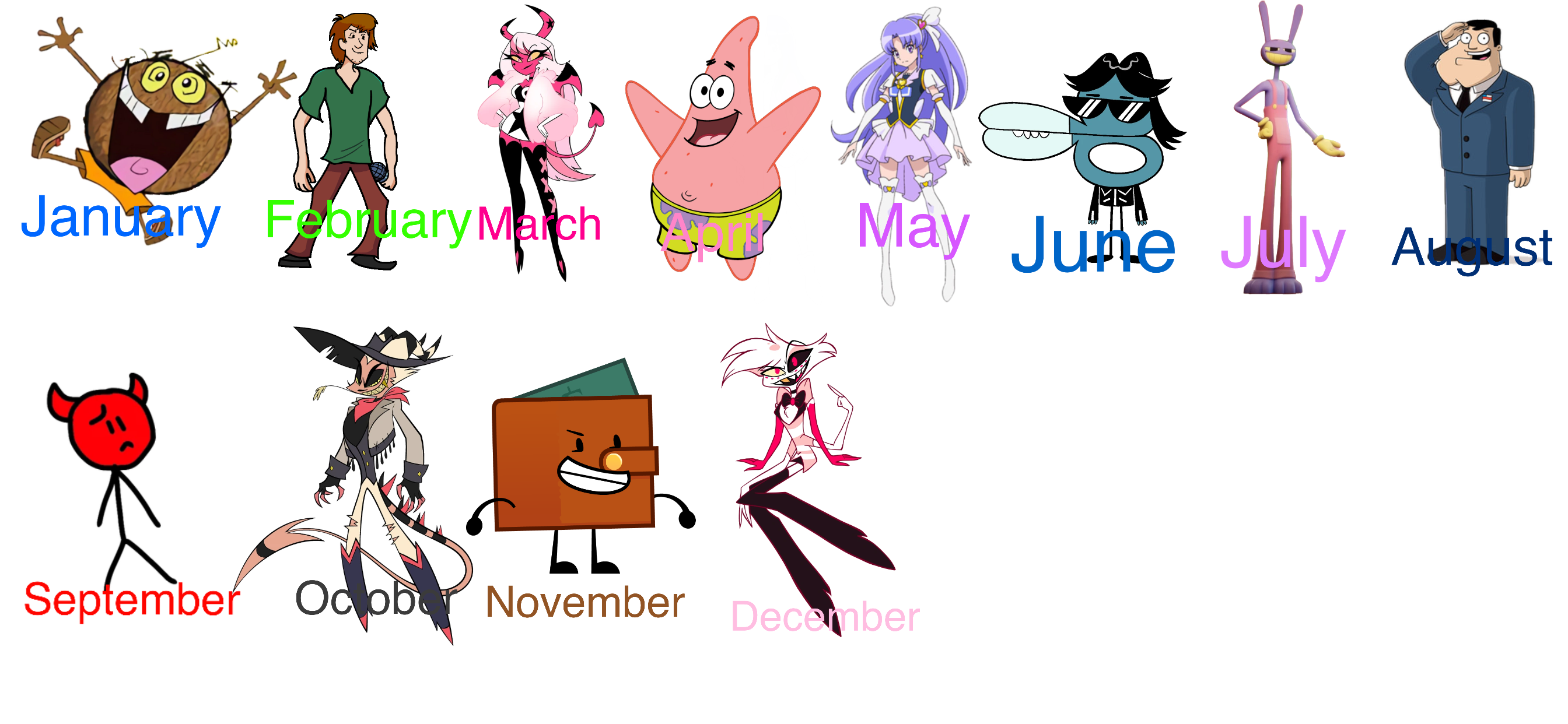
You’ve seen them. Those grids of twelve colorful boxes, each one housing a different hero or villain, usually paired with a month of the year. It’s the "your month your anime character" format, and honestly, it’s one of those internet phenomenons that shouldn't work as well as it does. Why do we care if a random algorithm decided we’re Gohan because we were born in May?
It’s personal. Sorta.
Social media thrives on identity. We want to see ourselves in the media we consume, and anime, with its hyper-specific character archetypes, provides the perfect playground for that. These posts aren't just filler; they are digital horoscopes for the Shonen Jump generation. They spark debates, fuel "who would win" arguments, and occasionally cause a minor existential crisis when you realize you’re the character everyone hates.
The Psychology Behind Your Month Your Anime Character
People love categories. Psychologically, we are wired to find patterns and belong to groups. It’s why the Myers-Briggs Type Indicator (MBTI) or the Enneagram stays popular despite scientists being, well, pretty skeptical about their absolute accuracy. When you see a your month your anime character post, your brain immediately skips the other eleven options. You look for your month. You’re looking for a mirror.
If the post says January is Naruto Uzumaki and February is Sasuke Uchiha, a rivalry is instantly born in the comments section. It’s low-stakes tribalism. It’s fun.
The engagement isn't just a fluke. According to digital trend analysts, content that asks a user to identify themselves within a set—what many call "identity-based bait"—consistently outperforms static images or standard news. This is because every person who interacts with it feels like the post was made specifically for them, even though it was made for everyone. It’s a clever trick of the light.
Why Engagement Hubs Like TikTok and Instagram Love This
The "your month" format is a goldmine for the algorithm. Algorithms don't care if you're actually a "Leo/Goku." They care that you spent six seconds looking at the image and then three minutes arguing with a stranger in the comments about why Aries should have been Vegeta instead of Krillin.
Think about the structure. It’s a visual list. It’s digestible. In a world where our attention spans are basically shorter than a 15-second "Next Episode" countdown, these grids provide instant gratification. You see. You identify. You share.
What Most People Get Wrong About These Character Assignments
Most creators of these grids aren't just picking names out of a hat. There’s often a subtle logic to it, even if it feels random. Often, characters are grouped by their "vibes" or seasonal energy.
Take "October" characters, for example. You’ll almost always see someone like Ken Kaneki from Tokyo Ghoul or Alucard from Hellsing assigned to October. It fits the spooky season. Conversely, bright, energetic protagonists like Luffy or Natsu Dragneel often land in the summer months of June or July. When a creator gets this "vibe check" wrong, the community lets them know. Loudly.
There is also the "Tier List" trap. Some creators intentionally put a "weak" or "annoying" character in a popular birth month just to drive "hate-comments." If you're a November baby and the post says you're Sakura Haruno (from the early days, before she was a powerhouse), you’re probably going to comment something like, "Why did you do November dirty like that?"
That comment? That’s exactly what the creator wanted. It boosts the post's reach.
The Evolution of the "Your Month" Meme
It started with simple text posts on Tumblr and early Facebook groups. Then it migrated to Twitter. Now, on TikTok and Reels, it’s evolved into high-production videos with "phonk" music and flashing transitions. The "your month your anime character" trend has become a template for creators to show off their editing skills while piggybacking on established fanbases.
It’s not just months anymore, either. We’re seeing:
- Your birth day (1-31) decides your weapon.
- Your battery percentage decides your power level.
- The last digit of your phone number decides your mentor.
Basically, any data point can be turned into an anime-related identity marker. It’s a modular way of storytelling where the audience is the main character.
How to Actually Use This for Your Community (If You’re a Creator)
If you’re looking to make one of these that actually goes viral and doesn't just look like "AI-generated slop," you have to know your audience. You can't just throw twelve random characters together.
First, pick a theme. Don't just do "Anime Characters." Do "90s Retro Anime" or "Characters with God-Tier Swordsmanship." This narrows the niche. It makes the people who do recognize the characters feel more "in the know."
Second, vary the power levels. If every month is an overpowered protagonist, it’s boring. You need some variety. Throw in a dark horse. Maybe September is a side character who everyone loves more than the lead. That creates a "if you know, you know" moment.
Third, the visual hierarchy matters. Don't crowd the text. Use high-quality renders. If the image is blurry, people will scroll past it before they even find their birth month.
The Ethics of Fan Art and Credit
One thing that gets lost in the "your month your anime character" shuffle is who actually drew the art. Most of these grids use official promotional art, which is fine, but many use fan art found on Pinterest or Google Images without credit.
If you’re a fan, it’s worth looking at the watermark. Supporting the original artists is what keeps the anime community alive. A lot of the high-end "your month" videos on TikTok use art that took someone forty hours to paint, only for it to be covered by a "May" sticker.
Real Examples of Character Archetypes by Month
While there’s no "official" list—because, again, this is all just internet fun—certain patterns have emerged in the most viral versions of this trend over the last year.
- January: Often associated with "The Leader" or the "Stoic Strategist." Think Levi Ackerman or Shoto Todoroki. It’s the start of the year; it needs a solid foundation.
- April: Frequently the "Wild Card." This is where you see characters like Hisoka or Power from Chainsaw Man. Unpredictable, just like spring weather.
- August: The "Powerhouse." This is prime time for the big hitters. Goku, All Might, or Escanor. It’s the heat of summer; you want characters that radiate energy.
- December: Usually reserved for the "Goats" or the "Masterminds." Madara Uchiha or Sosuke Aizen often land here. It’s the finale of the year, so you need a heavy hitter to close it out.
Actionable Next Steps for Anime Fans
If you're tired of seeing the same three characters on every list, or if you want to engage more deeply with the community, here is how to navigate the "your month your anime character" landscape more effectively:
- Check the Source: Before sharing a grid, look at the characters. If it’s all from one show, it’s a "fandom" post. If it’s a mix, it’s a "general" post. Knowing the difference helps you find better communities to join.
- Challenge the Creator: If you see a character assignment that makes no sense, ask why. "Hey, why is June a healer? June feels like a berserker month." This starts a conversation rather than just adding to the noise.
- Make Your Own (The Right Way): Use a tool like Canva or even just Instagram Layout. Pick characters from a show you actually like, not just the "trending" ones. This makes the post feel authentic.
- Look Beyond the Big Three: Don't just use Naruto, One Piece, and Dragon Ball. Try making a "your month your anime character" list using underrated gems like Vinland Saga, Monster, or Frieren. You’ll attract a more dedicated, knowledgeable audience.
The reality is that these posts are a digital "comfort food." They don't require much brainpower to consume, but they offer a small moment of connection in a very loud digital world. Whether you're a "January" protagonist or a "September" sidekick, the fun isn't in the accuracy—it's in the debate.