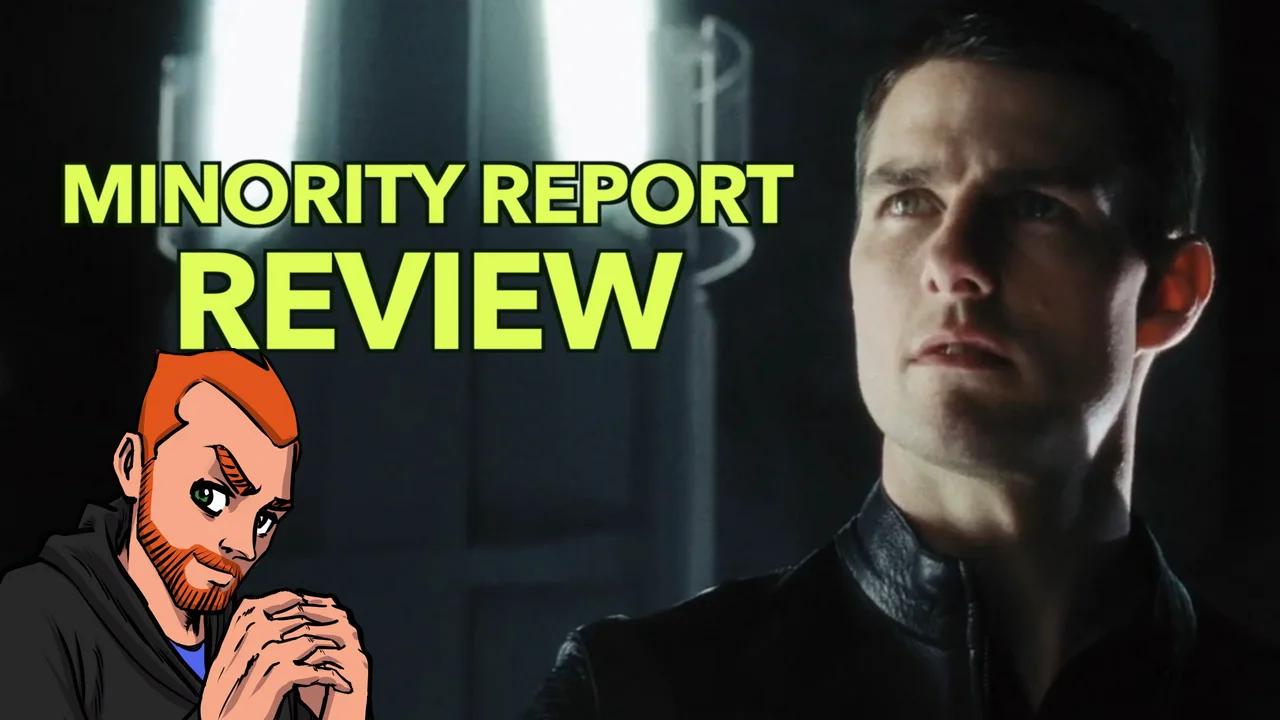
Honestly, Steven Spielberg’s 2002 masterpiece Minority Report did something weird to our collective brains. It wasn't just the cool gesture-based screens or the high-speed maglev chases. It was the crushing weight of the question: If you knew you were going to commit a murder, could you just... choose not to?
That tension between free will and determinism is a drug. And if you’re like me, once you’ve had a taste of that high-concept, tech-noir paranoia, you want more. You want movies that make you squint at your Alexa and wonder if she’s already filed a police report for a thought you haven't had yet.
Finding movies similar to Minority Report isn't just about finding other sci-fi flicks with Tom Cruise. It’s about finding stories that sit in that uncomfortable intersection of "preventative" justice and the loss of human agency.
The Philip K. Dick Connection: Total Recall and Beyond
You can't talk about Minority Report without talking about the man who birthed it: Philip K. Dick. The guy was practically the patron saint of "Is this reality or just a really convincing simulation?"
If you want that specific flavor of identity crisis, you’ve got to start with Total Recall. I’m talking about the 1990 Paul Verhoeven version with Arnold Schwarzenegger. Forget the 2012 remake; the original has the grit and the soul. It’s based on Dick’s short story "We Can Remember It for You Wholesale."
Both movies share a DNA of deep-seated corporate mistrust. In Minority Report, the system uses psychics; in Total Recall, they use implanted memories. Both ask the same terrifying question: How do you know who you are when your own mind is a product of the state?
Why Blade Runner is the Spiritual Older Brother
If Minority Report is the sleek, blue-filtered future of 2054, Blade Runner (1982) is its grimy, rain-soaked ancestor.
It’s another Philip K. Dick adaptation—loosely based on Do Androids Dream of Electric Sheep?—and it defines the "tech-noir" aesthetic. You have a protagonist (Rick Deckard) who, like John Anderton, is a specialized hunter working for the law. But as he tracks down "replicants," the line between the hunter and the prey disappears.
The Ethics of the "Pre-Crime" Logic
There's a specific sub-genre of sci-fi that deals with the math of crime. These are the movies where the government or a corporation thinks they've "solved" human behavior.
- Equilibrium (2002): This one is a hidden gem. Released the same year as Minority Report, it features Christian Bale in a world where emotions are illegal. Why? Because emotions cause war and crime. The "Grammaton Clerics" are basically the Precrime unit but for feelings. It’s got incredible "Gun-fu" action, but the core is that same struggle for the right to be unpredictable.
- Gattaca (1997): Instead of predicting murders, this society predicts your entire life's potential based on your DNA at birth. If your genes say you’ll have a heart condition at 30, you aren't allowed to be an astronaut. It’s "Pre-Failure" instead of "Pre-Crime." Ethan Hawke’s character is essentially a "Minority Report" in human form—a statistical anomaly who proves the system wrong.
Modern Successors: The New Wave of Determinism
Since 2002, the technology in our real world has actually started to catch up. We have predictive policing algorithms now. We have "personalized" ads that seem to know we’re hungry before we do. Because of this, movies similar to Minority Report have become even more grounded and, frankly, scarier.
Looper (2012)
Rian Johnson’s Looper is probably the closest thing we’ve had to a modern successor in terms of "fated" violence. It uses time travel as a tool for organized crime. Joe (Joseph Gordon-Levitt) kills people sent from the future. The catch? One day, his future self (Bruce Willis) is sent back to be killed. It’s a closed loop. The movie grapples with the same "can you change the path?" logic that drove Anderton to kidnap a precog.
Upgrade (2018)
If you liked the "man against the machine" aspect of Minority Report, you need to see Upgrade. It’s a low-budget, high-concept thriller where a paralyzed man gets an AI chip named STEM implanted in his spine. At first, it’s about justice. Then, it’s about control. The way the camera moves during the fight scenes feels like a direct evolution of the frantic, kinetic energy Spielberg brought to the 2054 chase sequences.
The Surveillance State: Paranoia as a Plot Point
A huge part of the Minority Report vibe is the feeling of being watched. Everywhere John Anderton goes, retinal scanners scream his name to sell him Guinness or Lexus.
- The Adjustment Bureau (2011): Matt Damon discovers that his life is being managed by a group of men in hats who ensure everyone stays "on plan." It’s less about police work and more about the cosmic version of Precrime. If you deviate from the script, the "Adjusters" step in to fix it.
- Enemy of the State (1998): This one isn't sci-fi, but it’s the definitive "man on the run from a high-tech government" thriller. Gene Hackman and Will Smith deal with the exact kind of satellite-eye-in-the-sky surveillance that made Anderton’s escape through the mall so tense.
- Source Code (2011): Jake Gyllenhaal is sent back into a memory of a train bombing to find the culprit. It’s a "post-crime" investigation that feels like Precrime because he has to keep reliving the event until he can stop the next one.
Does Precrime Actually Work in Real Life?
In the movie, the Precrime system was "perfect" for six years. Zero murders in Washington, D.C. But as the character Danny Witwer (Colin Farrell) points out, the flaw isn't in the psychics—it's in the humans who interpret them.
In our world, we have things like PredPol (Predictive Policing) software. It uses historical data to guess where crimes might happen. Critics of these systems, like the ACLU, often point out that these algorithms can reinforce existing biases. If you only send police to neighborhoods where they've historically made arrests, you'll find more crime there, creating a feedback loop.
This is the real-life "Minority Report." It’s the data-driven version of a "pre-vision" that might be wrong but is treated as gospel.
What to Watch Next
If you’ve already seen the big ones like Inception or The Matrix, and you’re looking for something that hits that specific itch for high-stakes, high-concept sci-fi, here is your roadmap:
- For the "Man on the Run" feel: Watch The Fugitive (1993). It's not sci-fi, but Spielberg modeled much of the chase structure in Minority Report after this classic.
- For the "High-Tech Mystery" vibe: Check out Source Code. It’s tight, fast-paced, and has a similar "puzzle-box" structure.
- For the "Bleak Future" aesthetic: You can't beat Children of Men (2006). It lacks the gadgets, but it captures the "world in decay" feeling perfectly.
- For the "Identity Crisis" theme: Give Dark City (1998) a spin. It’s a visual marvel that predates The Matrix and deals with memories being swapped while people sleep.
Stop searching for "movies like" and just start with Looper or Gattaca. They'll give you that same feeling of the walls closing in while the clock ticks down to a future you’re trying desperately to avoid.
Next Step: Pick one of the "Philip K. Dick" adaptations mentioned above—A Scanner Darkly is a fantastic, trippy choice if you want something visually unique—and watch it tonight to see how the author's original themes of paranoia evolved from the 50s to today.