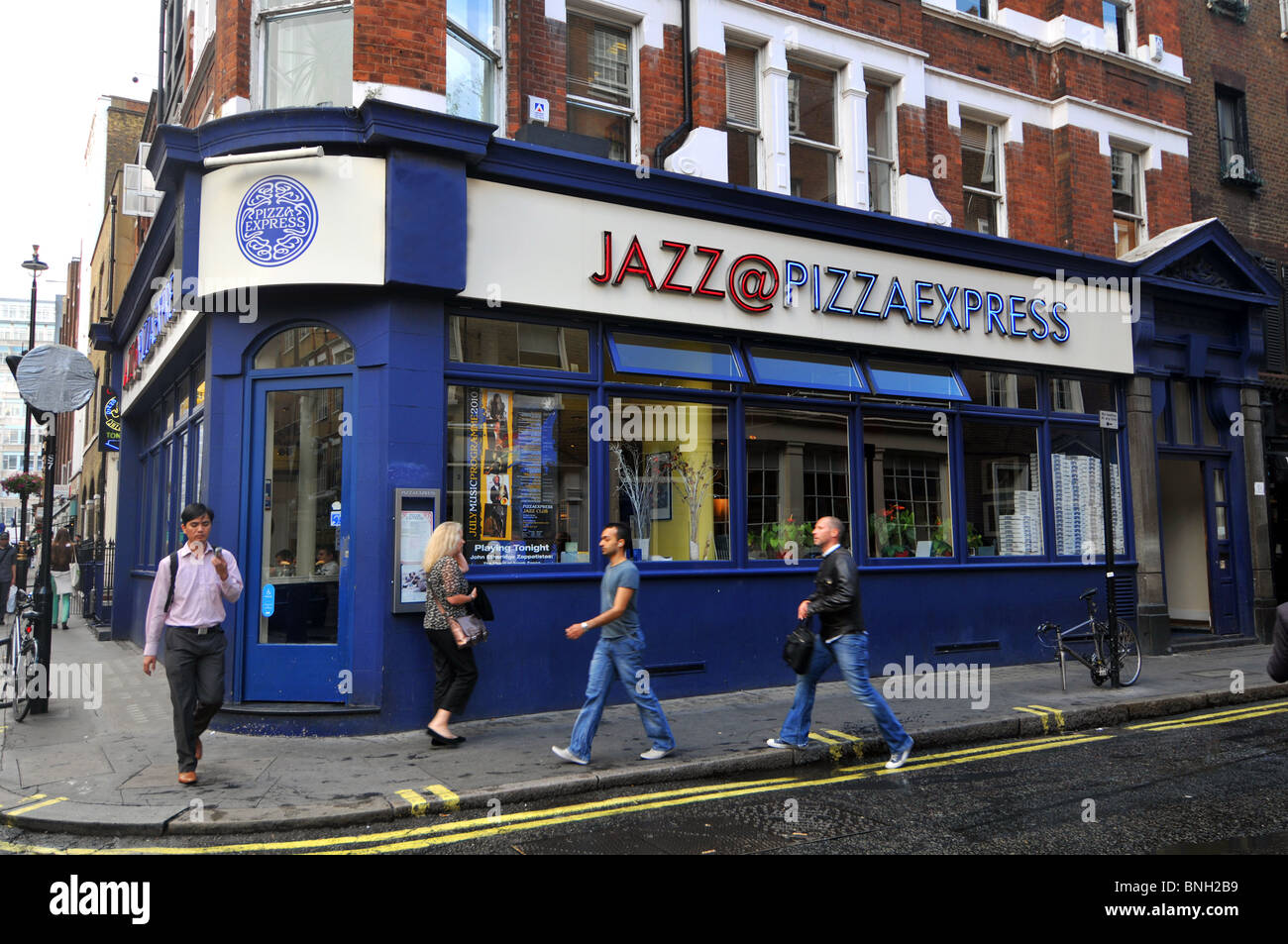
Walk down Dean Street in Soho on a rainy Tuesday and you might miss it. To the uninitiated, it looks like just another branch of a ubiquitous pizza chain. But for anyone who actually knows the history of British music, the Pizza Express Jazz Club Dean Street London is basically hallowed ground. It isn’t just a place to grab a Sloppy Giuseppe; it’s a basement that has hosted legends like Ella Fitzgerald, Amy Winehouse, and Gregory Porter.
It’s weird, right? A pizza joint being a world-class jazz venue.
Honestly, it shouldn't work. Usually, when big corporations try to do "culture," it feels sanitized and corporate. But the Dean Street spot is different because it was born out of genuine obsession. Peter Boizot, the founder of Pizza Express, didn’t just like pizza—he lived for jazz. When he opened the basement in 1976, he wasn't looking for a "unique selling point" for a marketing deck. He just wanted a place where he could eat good food and hear a world-class trumpet solo.
The Basement That Changed Soho
Most people think "jazz club" and imagine a smoky, exclusive cavern where you need a secret handshake to get in. Dean Street is the opposite. It’s intimate, sure, but it’s remarkably accessible. You’re literally sitting at a table eating dinner while some of the best musicians on the planet are three feet away from your dough balls.
The acoustics are famously dry. That might sound like a technicality, but for a jazz musician, it’s everything. There’s no reverb to hide behind. If you hit a wrong note at the Pizza Express Jazz Club Dean Street London, everyone hears it. This "honest" sound is why so many live albums have been recorded here. From the Scott Hamilton Quintet to Charlie Watts (yes, the Rolling Stones drummer), artists keep coming back because the room demands their best.
It's also about the geography. Soho has changed a lot. Gentrification has ripped the soul out of most of the old haunts, turning them into high-end boutiques or glass-fronted offices. Yet, this basement remains. It’s a pocket of the old Soho—the one that was messy, loud, and unpretentious.
What You Actually Need to Know Before You Go
Don't just turn up at 8:00 PM expecting a seat. You'll be disappointed.
Booking is essential, especially for the big-name residencies. Unlike Ronnie Scott’s, which is just a few streets away and often feels like a "see and be seen" type of place, Dean Street is for the nerds. People go there to actually listen. If you start chatting loudly during a ballad, expect some very pointed stares from the tables around you.
- The Seating: It’s tight. You’re going to be rubbing elbows with strangers. Embrace it.
- The Food: It’s the standard Pizza Express menu. Is it the best pizza in London? Probably not. Is it comforting and reliable while you watch a Grammy winner play the saxophone? Absolutely.
- The Timing: Shows usually have two sets. If you can, aim for the second set; the energy often feels a bit looser, a bit more "after hours."
The club doesn't just stick to the classics, either. While you'll definitely see the "Great American Songbook" style of jazz, they are huge supporters of the new UK jazz scene. Names like Nubya Garcia and Ezra Collective have roots that trace back to these small London stages. It’s a vital pipeline for talent.
The Peter Boizot Legacy
We have to talk about Boizot for a second. The guy was an eccentric. He once bought a football club (Peterborough United) just because he could. But his real gift to London was the Jazz Club. He insisted on a Steinway grand piano—the "Rolls Royce" of pianos—for the basement. He knew that if you provide the best tools, the best artists will come.
He died in 2018, but the spirit of the place hasn't flickered. Even under corporate ownership, the jazz programming remains remarkably independent. They haven't "Pop-ified" it. You won't find a karaoke night here.
Why the Critics Still Love It
Music critics are usually a cynical bunch. Yet, you’ll regularly find reviewers from The Guardian or Jazzwise tucked into a corner at Dean Street. Why? Because the programming is brave.
They take risks on international artists who haven't made it big in the UK yet. They host the London Jazz Festival events every November, turning the basement into a literal furnace of creativity. It’s one of the few places where the ticket price remains relatively sane—often between £20 and £35—compared to the astronomical prices at major concert halls.
Navigating Your First Visit
Getting there is easy—Tottenham Court Road or Leicester Square stations are your best bets. Once you’re on Dean Street, look for the neon sign. You go through the main restaurant, past the people eating their Periana pizzas, and head down the stairs.
The transition is instant. The smell changes from garlic butter to that specific, slightly dusty "club" scent. The lights are low. The walls are covered in photos of the greats who have played there. It feels like stepping back into 1970s London, but without the terrible fashion.
One tip: Check the "Late Night" sessions. Sometimes they have musicians who are just looking to jam after their main gigs elsewhere in the city. You never know who might walk through that door with a horn case.
A Quick Reality Check
Is it perfect? No. If you’re claustrophobic, you might find it a bit much. The service can be frantic when the room is at capacity because the staff are trying to navigate between very tightly packed tables without knocking over someone's wine. But that’s part of the charm. It’s a living, breathing club, not a museum.
Also, remember that the Pizza Express Jazz Club Dean Street London is a "listening room." This isn't a background music situation. If you want to catch up with a friend and talk about your week, go to the restaurant upstairs. The basement is for the music.
Practical Steps for Your Trip
If you’re planning to visit, don't just wing it. The venue is small—holding only about 100 people—so it fills up fast.
- Check the Calendar Early: Their website is updated months in advance. Look for names you don't recognize; that's often where the magic happens.
- Join the Club: They have a loyalty scheme. If you're going to go more than twice a year, it actually saves you a decent amount on tickets and food.
- Arrival Time: Aim to get there 30 to 45 minutes before the show starts. This gives you time to order your food and settle in so you aren't crunching on a crust during a quiet piano solo.
- Dress Code: There isn't one. You'll see people in suits and people in hoodies. Soho is a melting pot; just be yourself.
The Pizza Express Jazz Club Dean Street London remains a cornerstone of the city’s nightlife because it refuses to pretend to be something it’s not. It’s a basement. It serves pizza. It plays world-class jazz. In a world of over-complicated "concepts" and "immersive experiences," that simple honesty is exactly why it’s still standing.
To make the most of your night, start by looking at the upcoming residency list for the next month. Pick a genre you’re slightly unfamiliar with—maybe some Latin Jazz or a contemporary fusion group—and book a table for a Thursday night. It’s the best way to experience the room when the weekend crowd hasn't quite taken over, but the energy is starting to build. Make sure to try the Calzone if you're hungry; it's a classic for a reason, much like the venue itself.